Humid Heat Outfits: Breathable Fabrics & Easy Capsule
Stay Cool in Humid Heat: Breathable Fabrics, Sweat-Smart Styling, and Easy Outfit Planning
Humid heat makes even “light” outfits feel heavy when airflow is blocked and sweat can’t evaporate. The most comfortable summer wardrobe combines breathable fabrics, loose-but-structured fits, sweat-friendly colors, and simple outfit formulas that reduce decision fatigue. Below is a practical guide to what to wear (and what to skip), plus easy ways to plan a small rotation that stays polished while feeling cooler.
Why humid heat feels so uncomfortable
In high humidity, sweat doesn’t evaporate efficiently, so your body’s natural cooling system can’t do its job as well. That’s why a day that’s “only” warm on the thermometer can feel stifling once the air is saturated.
Clothing can make this worse. Tight fits, non-breathable fibers, and heavy linings trap moisture close to the skin, increasing that sticky, overheated feeling. The goal is straightforward: maximize airflow and moisture movement while minimizing cling, friction, and visible sweat.
For safety basics during extreme heat, it helps to review guidance from the CDC and understand the National Weather Service heat index, which reflects how hot it feels when humidity rises.
Breathable fabrics that actually help
Fabric choice does more for comfort in humidity than simply picking “summer” items. Focus on fibers and weaves that let air pass through and that don’t hold moisture against your skin.
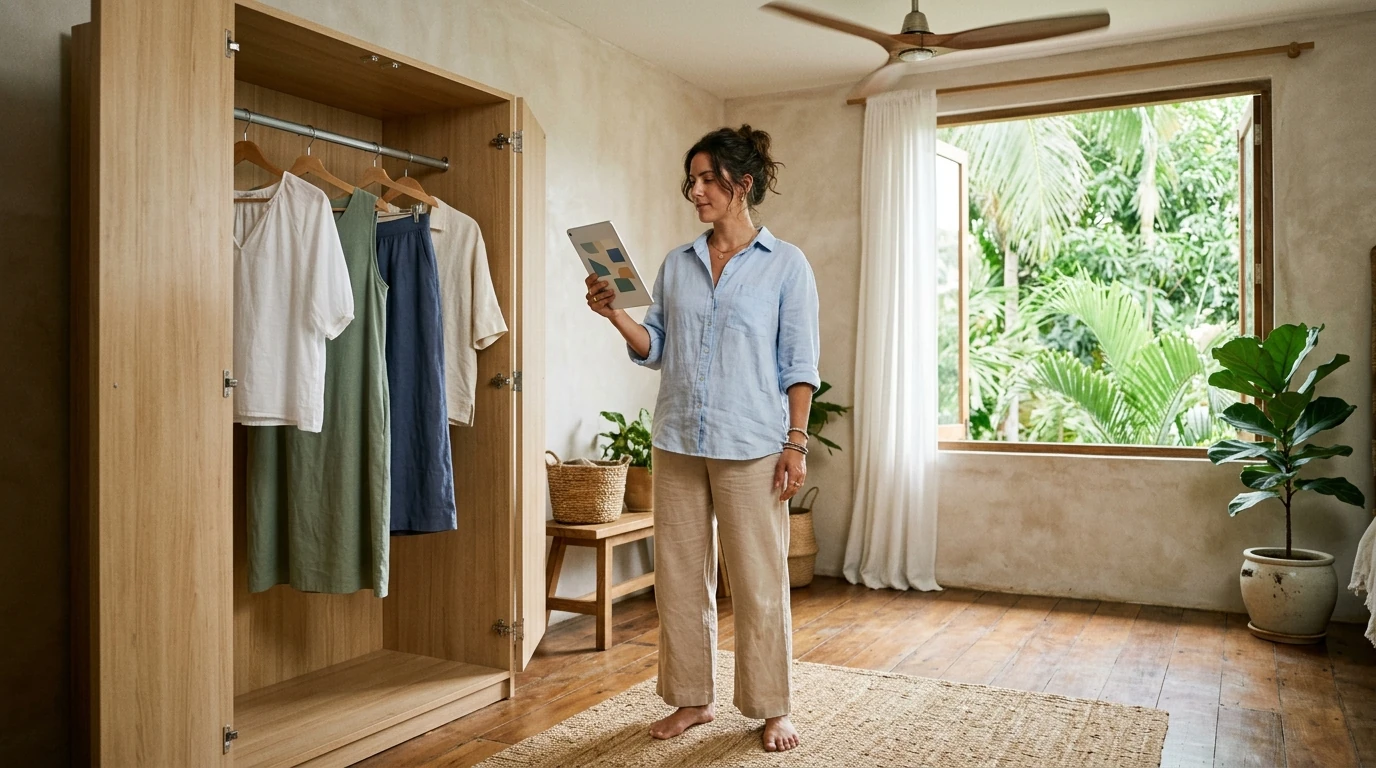
- Prioritize high-breathability options: linen, lightweight cotton, cotton voile, chambray, gauze, and summer-weight viscose/rayon blends that drape without sticking.
- Use performance fabrics strategically: moisture-wicking poly/nylon blends can shine for high-sweat commutes and workouts, especially when the knit is airy or includes ventilation panels.
- Use quick fabric “cues” in your hands: look for an open weave, low-to-mid weight, and a soft hand that doesn’t feel coated. Hold it to the light—if you can see light through it, airflow potential is usually better.
- Avoid common heat traps: heavy denim, thick jersey knits, tight ribbing, and dense synthetics that feel plasticky and cling once damp.
Quick fabric guide for humid days
| Fabric | Best for | Why it works | Watch-outs |
|---|---|---|---|
| Linen | Everyday, work-casual, travel | High airflow and a quick-drying feel | Wrinkles; choose blends or textured weaves if preferred |
| Lightweight cotton (voile/gauze) | Errands, lounging, layering | Breathable and gentle on skin | Can show sweat in very thin light colors |
| Chambray (light) | Polished casual, office-casual | Breathable alternative to denim | Avoid heavy chambray that mimics denim weight |
| Viscose/rayon (summer weight) | Dresses, wide-leg pants | Drapes away from skin | Can cling if too thin; check lining and fit |
| Moisture-wicking performance knit | Walking, commuting, workouts | Moves sweat off skin; dries faster | Choose airy construction; avoid tight compression in humidity |
Fit and construction: the hidden cooling features
Even the best fabric can feel miserable if the cut traps heat. Aim for silhouettes that float slightly off the body while still looking intentional.
- Create airflow with shape: relaxed tees, boxy tops, breezy button-ups, wide-leg pants, A-line skirts, and shift dresses.
- Keep fabric off high-sweat zones: underarms, mid-back, waistband, and inner thighs. Dolman sleeves, sleeveless cuts, and slightly looser rises can make a big difference.
- Look for cooling details: side slits, back pleats, vented hems, open collars, and unlined (or partially lined) pieces.
- Minimize friction: smoother seams, fewer layers, and anti-chafe shorts under skirts when needed.
Color and print choices that feel cooler and look fresher
Color is a comfort tool, but it’s also a sweat-management strategy. Light and mid-tone colors often feel cooler in direct sun, while darker colors can hide sweat better. Instead of choosing one “rule,” use both based on your day.
Sweat-smart outfit planning (without overpacking)
If you want a ready-to-use planning format for travel or weekday mornings, see Stay Cool in Humid Heat – Summer Wardrobe Guide (Digital Download).
Outfit ideas for common humid-heat scenarios
Office or office-casual
Errands and commuting
Outdoor gatherings
Active days
Pair a moisture-wicking top with quick-dry shorts. For high-sweat days, an airy performance shirt can be the most comfortable option—like the Men’s Quick-Dry Short Sleeve Sports Shirt – Lightweight Workout & Running Top.
Care, finishing touches, and comfort upgrades
- Laundry and odor control: in humid seasons, rotating garments so they fully dry between wears helps reduce odor retention. A quick rinse cycle after a sweaty day can keep fibers fresher.
- Comfort add-ons: breathable socks, moisture-wicking underwear, and anti-chafe solutions can make skirts and dresses dramatically more wearable.
- Heat-safety basics: hydrate regularly, plan shade breaks, and watch for symptoms of overheating. For workplace and activity guidance, NIOSH heat stress resources are a solid reference.
A simple digital wardrobe guide for humid days
For a compact, reusable system that covers breathable fabric selection, outfit formulas, and a small rotation you can repeat across work, errands, and weekends, consider Stay Cool in Humid Heat – Summer Wardrobe Guide (Digital Download).
FAQ
What fabric is best for humid heat?
Linen and lightweight cotton (like voile or gauze) are top picks because they allow airflow and don’t cling as easily. Summer-weight viscose/rayon can also work well when it drapes away from the skin, while moisture-wicking performance fabrics are great for high-sweat activities if the knit is breathable.
How can outfits look put-together without layering in summer?
Use structure in the cut (camp collars, tailored shorts, clean midi silhouettes) and add interest with texture or prints instead of extra layers. Breathable fabrics in intentional shapes look polished while staying comfortable.
How do you reduce sweat marks on clothes in hot weather?
Choose prints, heathers, and textured fabrics, and opt for looser underarm cuts to reduce wet patches. Mid-tones often balance “cooler-looking” and “sweat-hiding,” and rotating garments so they fully dry between wears helps keep fabrics fresher.







Leave a comment