Pack Your Car for a Long Road Trip Without the Mess
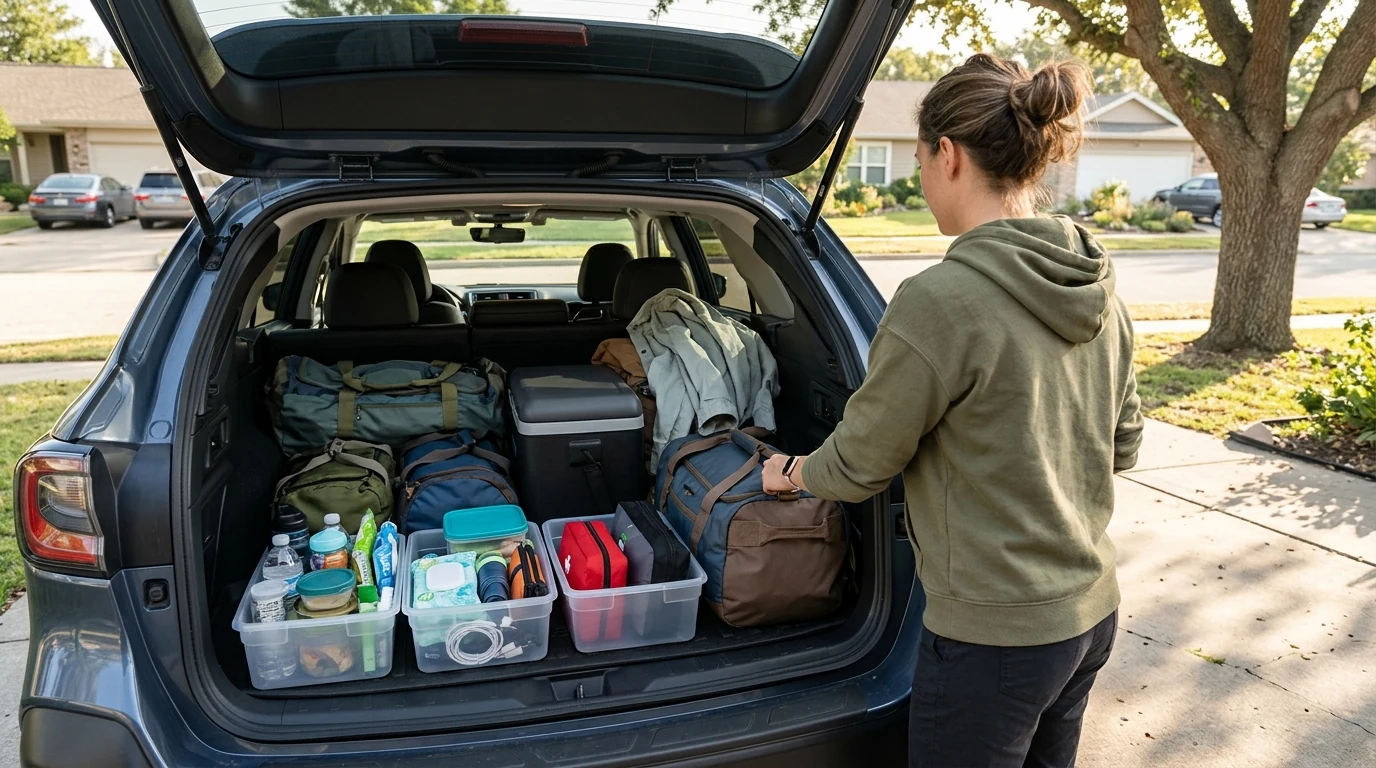
Road-Trip Ready Packing: How to Pack Your Car for a Long Trip Without the Chaos
Packing a car for a long trip is equal parts space-planning and safety planning. A smart loadout keeps essentials reachable, protects passengers in a sudden stop, and prevents the “trunk explosion” at every hotel or campsite. Use this practical system to sort, stage, load, and maintain an organized vehicle from day one to the final miles home.
Start with the trip map, not the trunk
Before you touch a duffel, define how your trip actually works. The route determines what needs to be reachable, what can be buried, and what should never come along.
- List the trip structure: number of days, climate swings, lodging type (hotel, camping, mixed), and how often the car will be fully unpacked.
- Define the access rhythm: what must be reachable every 30 minutes (water, wipes), every 2–3 hours (snacks, chargers), and once per day (toiletries, fresh clothes).
- Count passengers and assign each person a seat-zone and one personal bag limit to prevent overflow.
- Set a realistic storage rule: if it doesn’t have a job, it doesn’t get a spot.
- If the route includes remote stretches, plan extra water, a basic recovery kit, and offline navigation backup.
Car packing zones and what belongs in each
| Zone | Best for | Examples | Access frequency |
|---|---|---|---|
| Driver reach (console/door pocket) | Safety and quick grab items | Sunglasses, toll pass, tissues, hand sanitizer, lip balm, small flashlight | Constant |
| Front passenger footwell | Shared essentials without blocking pedals | Snack pouch, small cooler, charging hub, paper maps | Hourly |
| Back seat floor | Heavier items that should not fly forward | Water jugs, shoe bin, compact tool roll (secured) | Daily |
| Back seat pockets/seat organizer | Kid/comfort items | Wipes, books, headphones, travel games | Hourly |
| Trunk: top layer | Arrival-first needs | Overnight bag, toiletry kit, jackets, rain gear | Daily |
| Trunk: bottom layer | Rarely used, heavy, stable items | Spare fluids, emergency kit, bulk food, extra shoes | Occasional |
The sort-and-stage method that prevents overpacking
Overpacking usually happens when everything is treated as equally important. Staging at home forces smart decisions before the trunk becomes the decision-maker.
- Stage everything in four categories: Drive-Day, Daily Living, Destination, and Just-in-Case.
- Remove duplicates: aim for one multi-port charger, one first-aid kit, one sun/rain layer per person, and a shared toiletries core.
- Choose pack formats deliberately: soft duffels compress better than hard suitcases for irregular trunk shapes.
- Use modules instead of loose items: one food module, one hygiene module, one tech module, one weather module.
- For families: build a dedicated spill-response module (paper towels, trash bags, wipes, spare shirt) and keep it reachable.
If you want a repeatable framework with checklists for staging and load-in, keep Road-Trip Ready Packing: Ultimate Guide on How to Pack Your Car for a Long Trip – eBook on your phone so the same plan is easy to reuse for future trips.
Load order: stability, safety, and speed at stops
Loading is more than “will it fit?” A secure load protects passengers and keeps you from unloading half the trunk just to find a jacket.
- Place the heaviest items low and closest to the rear seatbacks to reduce shifting and improve handling.
- Avoid stacking hard items above soft ones; the top layer should be light and compressible.
- Keep emergency gear accessible without unloading the trunk (roadside triangles/flares, jumper solution, first aid, and a warm layer).
- Prevent projectiles: secure coolers and tool kits; don’t leave heavy items loose on seats.
- Balance left-to-right weight when possible, especially on smaller vehicles.
- Leave a narrow access lane along one side of the trunk so a single bag can be pulled out at a quick stop.
For a quick pre-departure safety baseline, it helps to review tire condition and pressure guidance from NHTSA Tire Safety, then do a simple road-trip readiness check like those recommended by AAA road trip planning resources.
Essentials that save the day on long drives
A few well-chosen items prevent most “we have to stop right now” moments, and they don’t have to take over your cabin.
Clothing that dries fast can cut down on “extra outfit” packing. A simple option is the Men’s Quick-Dry Short Sleeve Sports Shirt – Lightweight Workout & Running Top, especially if your route includes hikes, humid weather, or frequent rest-stop rinses.
Kid- and pet-friendly packing without clutter
Nightly reset routine for a consistently organized car
Better sleep can make early drive days safer and calmer. If you like structured wind-down prompts and planning help, use the AI-Powered Checklist for Better Sleep Adventures to keep a consistent bedtime routine while traveling.
A step-by-step packing plan you can follow in under an hour
For general travel health considerations—especially when your route includes different climates or longer stays—review practical guidance from the CDC travel tips and tailor your hygiene and medication modules accordingly.
FAQ
What is the best way to pack a car for a long road trip?
Pack by zones and modules: heavy items low and near the seatbacks, daily-use items on the trunk top layer, and drive-day essentials within reach. Secure loose gear so it can’t become a projectile during sudden stops.
How do you keep a road trip car organized every day?
Do a 5-minute nightly reset: remove trash, refill water, restock the front-seat pouch, and repack the trunk in the same order. Keep one charging pouch and one laundry bag so small items don’t spread through the cabin.
Where should emergency supplies go in the car?
Store them where they’re accessible without unloading—near the trunk opening or in a secured spot behind a seat. Avoid burying first aid and roadside gear under heavy luggage so you can reach it quickly when it matters.










Leave a comment