Warm Hands Fast: Windproof Cycling Handlebar Mitts
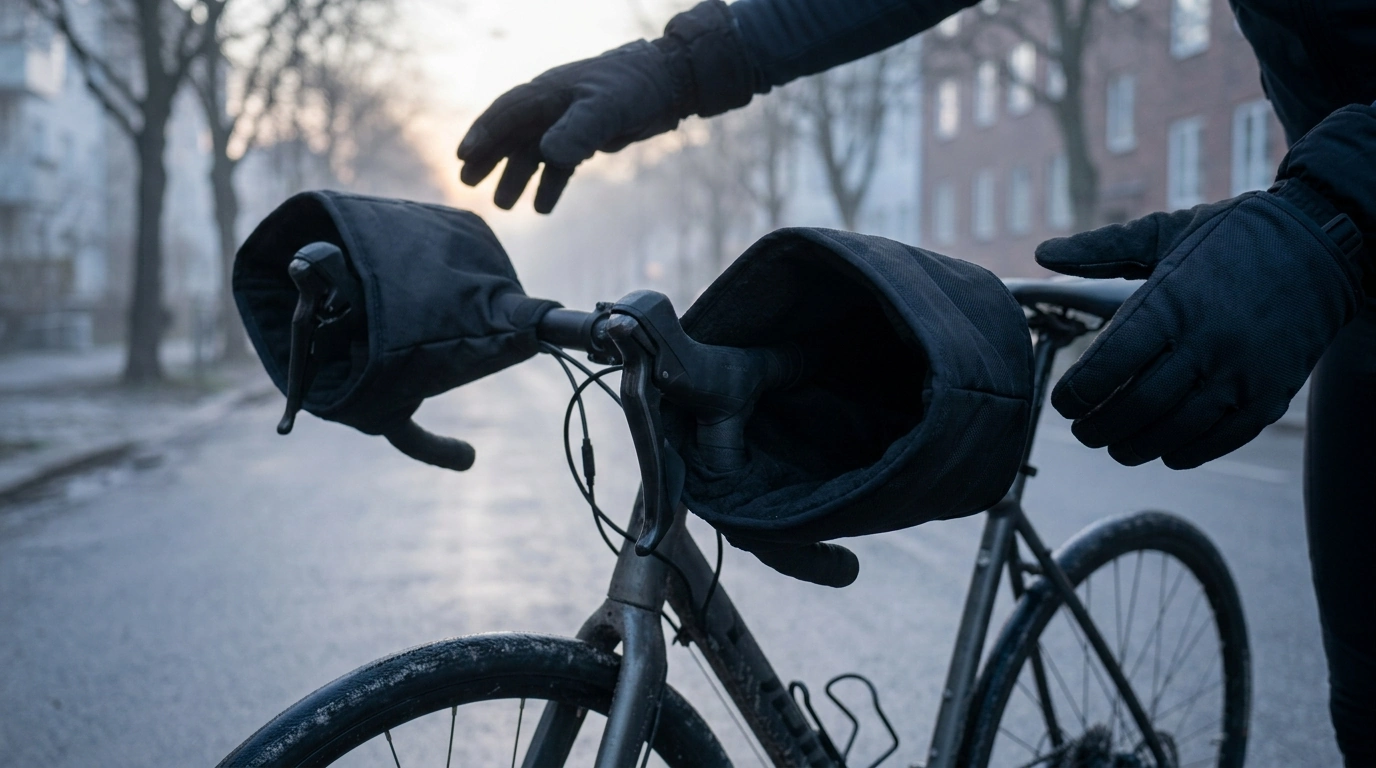
Cycling Handlebar Mitts for Cold, Windy Rides
Handlebar mitts create a warm pocket around the grips and controls, blocking windchill while keeping braking and shifting natural. They’re a practical upgrade for winter commuting, early-morning training, and wet shoulder-season rides when gloves alone aren’t enough. By turning your handlebar area into a sheltered microclimate, mitts help your hands stay warmer at speed—often with less bulk than stacking heavier gloves.
What Handlebar Mitts Do (and Why They Feel Warmer Than Gloves Alone)
Cold hands usually aren’t just a temperature problem—they’re a wind problem. Even when the air temperature is manageable, airflow across your knuckles and fingertips strips heat quickly, especially on descents and open stretches.
- Create a sheltered air space around your hands to reduce windchill at speed.
- Let lighter gloves work better by preventing cold air from pulling warmth away.
- Keep your hands on the grips with immediate access to brakes and shifters.
- Maintain dexterity for signaling, shifting, and quick stops—without wrestling with thick insulation.
If you’ve ever noticed your hands warming up right after you stop moving, that’s the windchill effect in action. For a quick refresher on how dramatically moving air changes “feels like” temperature, the National Weather Service Wind Chill Chart is a helpful reference.
Key Features to Look For in Windproof Thermal Bike Hand Covers
Not all mitts feel the same on the road. The best ones balance weather protection with a stable fit that won’t interfere with lever travel.
- Windproof outer shell to cut airflow across knuckles and fingertips.
- Thermal lining that insulates without feeling bulky at the bars.
- Weather resistance for mist, light rain, and road spray (especially for commuting).
- Wide, structured opening that’s easy to enter/exit with gloved hands.
- Secure attachment points that resist twisting when sprinting or climbing out of the saddle.
- Reflective details or high-visibility accents for darker winter rides.
A practical rule: choose warmth and wind protection first, then focus on ease of entry. The safest mitts are the ones you can get in and out of smoothly—no snagging, no searching, no surprises when traffic is close.
Fit and Compatibility Checklist
Compatibility is less about hand size and more about your cockpit setup. Before buying (or before committing to a new setup), check these basics.
- Handlebar type: verify compatibility with flat bars, drop bars, or bar-end extensions (if used).
- Shifter/brake layout: ensure the mitt opening doesn’t interfere with lever reach or hood access.
- Space around the controls: confirm enough clearance for hands to move without snagging.
- Accessory clearance: consider bells, lights, phone mounts, and cables that may share bar space.
- Commuter setup: account for fenders and wider tires that increase spray in wet weather.
| Setup | What to confirm before buying/using | Common fixes |
|---|---|---|
| Flat bar (MTB/commuter) | Mitts seat around grips without blocking brake levers | Reposition bell/light; tighten straps |
| Drop bar (road/gravel) | Access to braking position is unobstructed; mitts align with preferred hand position | Adjust mounting position; route cables neatly |
| Bar-end accessories | No conflict with bar ends, mirrors, or aero add-ons | Relocate accessories or choose a simpler cockpit layout |
How to Install and Use Them on Everyday Rides
A careful install makes the ride feel natural. Take a few minutes to set both sides evenly and verify full control movement.
- Secure the bike (kickstand, trainer, or against a wall) so both mitts align symmetrically.
- Attach around the grip area first, then stabilize the outer body so it doesn’t rotate under load.
- Check lever clearance: brake levers should pull fully without the mitt pressing on them at any point.
- Practice entry/exit in a safe area before riding in traffic—especially if you frequently signal or shoulder-check.
- Pair with thin to midweight gloves for comfort and moisture management on longer efforts.
Many riders find their “sweet spot” is a lighter glove inside the mitt. The glove handles sweat and quick off-bike tasks (keys, phone, locking up), while the mitt handles wind and spray during motion.
Comfort and Safety Notes for Winter Cycling
Warm hands are about comfort, but they’re also about control. When fingers get stiff or numb, braking and shifting can become slower and less precise.
Cold stress can escalate faster than expected when wind and damp conditions stack up. For broader cold-weather safety guidance, the CDC’s hypothermia information is a solid, practical resource.
Care and Storage to Keep Them Performing
Product Picks for Cold-Weather Riding
Wind Protection Where It Matters Most
If you want a simple, high-impact upgrade for winter and shoulder-season riding, start with a dedicated set of mitts like Cycling Handlebar Mitts – Windproof Thermal Bike Hand Covers. They’re designed to block wind and hold warmth around the grips, making them especially useful for commutes, early rides, and breezy descents where hands chill quickly.
Layer Smart Beyond Your Hands
When temperatures swing during a ride, breathable layers help prevent sweat buildup that later turns cold. A lightweight option like the Men’s Quick-Dry Short Sleeve Sports Shirt – Lightweight Workout & Running Top can work as a base or gym-to-ride layer in mild shoulder seasons, or as part of an indoor training setup when roads are icy.
FAQ
Do handlebar mitts replace winter gloves?
Often they allow lighter gloves, but in very low temperatures most riders still prefer at least a thin or midweight glove inside for comfort, sweat control, and quick off-bike tasks.
Will mitts interfere with braking or shifting?
Correctly installed mitts should leave full lever travel and an easy hand path. Check lever clearance, practice quick entry/exit, and adjust placement so nothing presses on the controls.
Are they suitable for rain and road spray?
They can help shield hands from spray and wind-driven drizzle. For sustained rain, dry them afterward and consider waterproof gloves or liners if your hands get cold when damp.









Leave a comment