USB Wired Headset: Noise-Cancelling Mic + In-Line Control
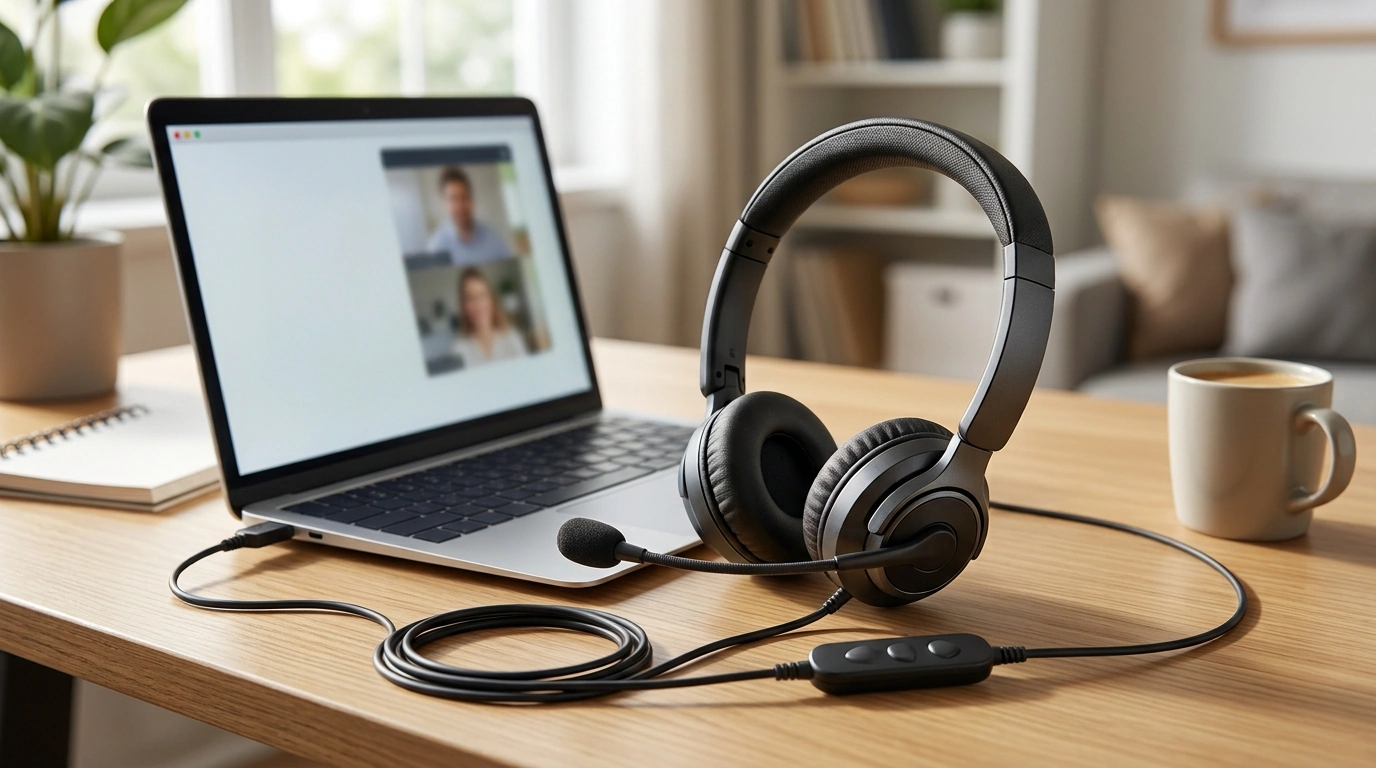
USB Wired Headset with Noise Cancelling Mic & In-Line Control for PC Laptop
Clear voice pickup and reliable plug-and-play audio matter for calls, classes, and daily computer work. A USB wired headset with a noise cancelling microphone and in-line controls helps reduce background distractions while keeping volume and mute within easy reach. For anyone who’s tired of flaky connections or scrambling for on-screen buttons mid-meeting, a simple wired USB setup can make day-to-day communication feel smoother and more predictable. For more guidance, see Supported Teams Devices – University of Idaho.
Who This Headset Fits Best
A USB wired headset is a practical choice when consistency and clarity matter more than extra features you may never use. This style of headset is especially well-suited for: For further reading, see Recommendations for webcams, headsets, cases, and other ….
- Remote work and office calls where consistent microphone clarity is more important than flashy sound effects
- Online classes, tutoring, and language practice that benefit from stable USB audio and quick mute access
- Customer support, telehealth, and frequent conferencing where comfort and simple controls reduce fatigue
- Shared spaces (home, coworking) where ambient noise can interfere with speech
- Users who prefer a wired connection to avoid Bluetooth pairing, battery management, and dropouts
If that matches your day, consider the USB Wired Headset with Noise Cancelling Mic & In-Line Control for PC Laptop as a straightforward workhorse for calls and computer audio.
What Noise Cancelling Microphone Performance Means in Real Use
“Noise cancelling” on a headset microphone is less about making the room silent and more about making your voice easier to understand. In practice, this typically means:
- It helps prioritize the speaker’s voice while reducing steady background sounds such as fans, HVAC, and distant chatter
- It improves intelligibility during conferencing so listeners ask for fewer repeats
- It works best when the mic is positioned near the corner of the mouth, slightly off-center to reduce plosives
- It does not fully remove sudden loud sounds; practical habits (closing doors, lowering speaker volume) still help
- It pairs well with meeting-app noise suppression for an extra layer of clarity
Common noise sources and practical results
| Noise source | What you may notice | Quick tip |
|---|---|---|
| PC fan / air conditioner | Voice stays more forward than the hum | Move the mic closer and lower input gain slightly |
| Keyboard typing | Reduced click prominence, but not eliminated | Angle the mic away from the keyboard and use a softer typing mode if available |
| Nearby conversation | Less distraction, but loud speech can still cut through | Use a directional seating position facing away from the noise |
In-Line Controls: Why They Matter During Calls
When you’re speaking with clients, students, or teammates, timing matters. In-line controls keep your most-used actions within fingertip reach:
- Fast mute/unmute without hunting for on-screen controls—useful when interrupted mid-sentence
- On-the-fly volume changes to match different callers and meeting rooms
- Reduces reliance on software controls that vary between Zoom, Teams, Meet, Discord, and VoIP tools
- Supports smoother handoffs between listening and speaking during presentations
- Useful for laptops with limited or awkwardly placed function keys
A helpful habit: treat hardware mute as your “quick reaction” button, but still glance at the meeting app’s mute icon before you start talking again—some platforms display the app mute state separately.
USB Connection Benefits for PC and Laptop Setups
A USB headset simplifies the audio chain. Instead of relying on a computer’s analog headphone/mic ports (or a combo jack that can be finicky), USB audio is typically more consistent across machines:
- Plug-and-play connectivity without separate 3.5mm mic/headphone jacks
- More consistent behavior across desktops, docking stations, and many modern laptops
- Avoids issues from worn analog ports, loose TRRS connectors, or incompatible combo jacks
- Convenient for swapping between work and personal computers
- Often preferred in IT-managed environments where drivers and settings are standardized
If Windows audio ever seems “off,” checking device selection and troubleshooting steps through Microsoft Support — Fix sound or audio problems in Windows can quickly narrow down whether it’s an app setting or a system setting.
Comfort and Practical Fit Considerations
Comfort is a performance feature when your headset is on for hours. Small fit details can decide whether you forget you’re wearing it—or can’t wait to take it off.
Setup Tips for Better Call Quality
Recommended In-Stock Picks
- USB Wired Headset with Noise Cancelling Mic & In-Line Control for PC Laptop ($33.97) — A practical USB solution for clear calls, stable audio, and quick in-line access to mute/volume.
- Men’s Quick-Dry Short Sleeve Sports Shirt – Lightweight Workout & Running Top ($35.82) — A breathable option for staying comfortable between meetings, commutes, and workouts.
- 16″ Rivet Nut Tool Kit with 11 Mandrels & 185pcs Rivnuts Assortment ($75.51) — A handy kit for garage and workshop projects that need secure threaded inserts.
FAQ
Will a USB wired headset work with both Windows PCs and laptops?
In most cases, yes—USB headsets are typically plug-and-play on Windows desktops and laptops. For best results, set the headset as the default input/output device in Windows sound settings and also select it inside your meeting app to prevent automatic switching.
Does a noise cancelling microphone remove all background noise?
No. It mainly reduces steady or consistent noise and helps your voice come through more clearly, but sudden loud sounds can still be heard. Position the mic close to the corner of your mouth and reduce room noise when possible for the cleanest pickup.
How do in-line mute and volume controls behave in meeting apps?
In-line controls usually manage the headset’s hardware mute and volume, while meeting apps also have their own software mute states. It’s smart to confirm the in-app mute indicator before speaking, and to run a quick test call to confirm the controls work the way you expect.









Leave a comment