Tidy, Pet-Friendly Home Systems for Stylish Calm
Creating a Tidy, Pet-Friendly Home: Simple Systems for Stylish, Low-Stress Living
A home can look pulled-together and still be practical for shedding, muddy paws, toys, and feeding stations. The goal is not perfection—it’s setting up a few repeatable systems that make daily cleanup fast, protect surfaces, and keep pets comfortable. With a few smart “homes” for your supplies, easy-to-clean materials, and a quick reset routine, pet mess stops feeling like a constant project and starts feeling manageable.
Start with a “pet footprint” map
Before buying bins or reorganizing closets, map how your pet actually moves through the house. This prevents you from creating storage that looks nice but doesn’t get used.
- Identify the high-traffic routes: door to couch, couch to water bowl, litter box to favorite nap spots.
- List friction points by room (hair on upholstery, scattered toys, scratched door frames, tracked litter).
- Decide what must be accessible 24/7 (water, potty area, a bed) and what can be stored away (most toys, grooming tools).
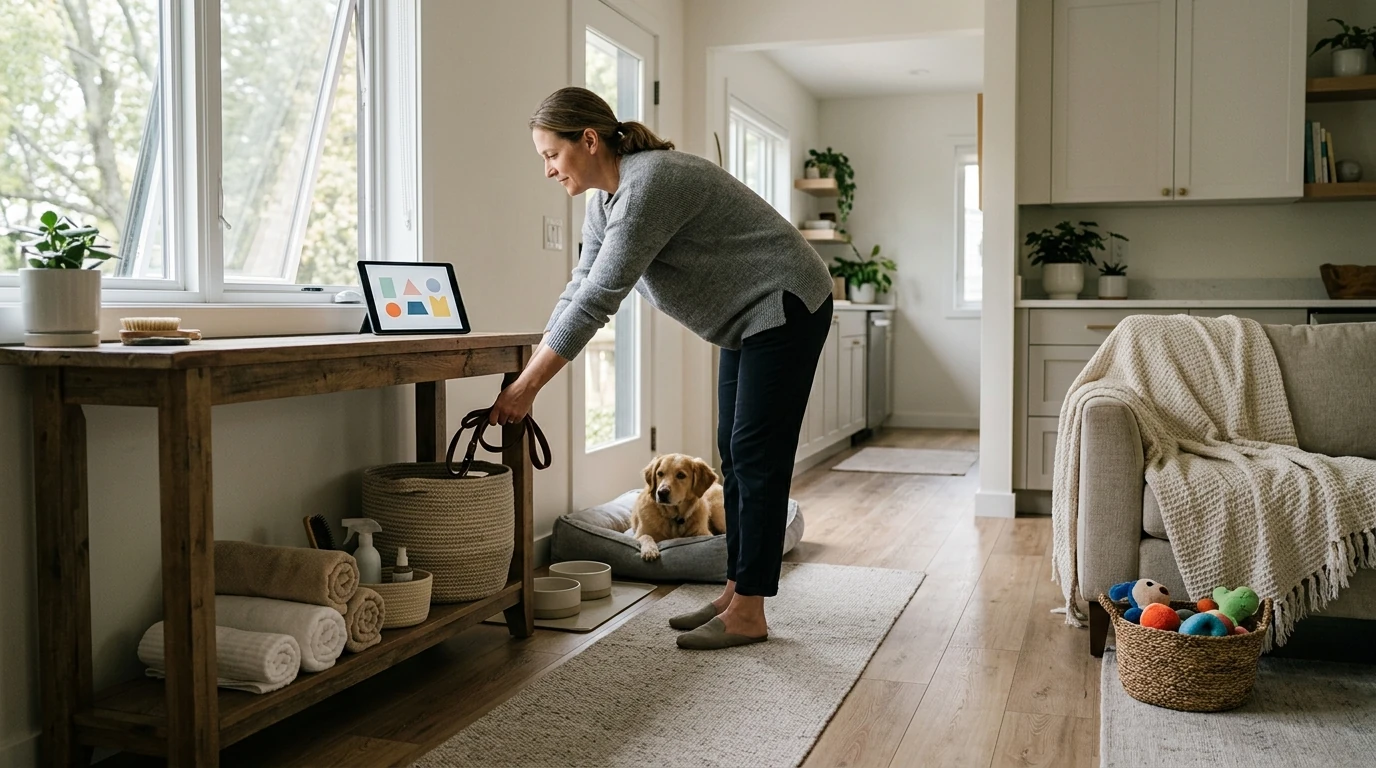
- Choose one drop zone near the entry for leashes, wipes, and towels to stop mess at the source.
Think of this as designing for behavior: if paws always hit the same stretch of hallway, that’s where the runner goes; if leashes always land on the kitchen chair, that’s where hooks belong.
Declutter with pet-safe rules that are easy to keep
Decluttering sticks when it’s simple enough to repeat on a busy day. The aim is fewer categories, fewer decisions, and fewer stray items with no assigned “home.”
- Use the “one-bin per category” method: toys, grooming, meds/first aid, travel gear, training tools.
- Create a weekly toy rotation so only a small set stays out, reducing visual clutter and making play feel new.
- Store pet food in an airtight container and keep a small daily canister or scoop jar for convenience.
- Place duplicates where they’re used: lint roller upstairs and downstairs, enzyme cleaner in laundry and entry closet.
Quick setup: tidy zones and what to store there
| Zone | What belongs there | Container idea | Upkeep rhythm |
|---|---|---|---|
| Entry drop zone | Leash, harness, poop bags, paw wipes, towel | Wall hooks + small lidded bin | Reset after each walk |
| Feeding station | Food container, scoop, placemat, spare bowl | Airtight bin + washable tray | Wipe daily, deep-clean weekly |
| Grooming caddy | Brush, nail trimmer, shampoo, lint roller | Handled caddy or basket | Restock monthly |
| Toy corral | Daily toys only | Open basket with washable liner | 5-minute pickup nightly |
| Cleaning kit | Enzyme cleaner, paper towels, gloves | Under-sink bin (latched if needed) | Check weekly |
Choose materials that look good and clean up fast
Pet-friendly design doesn’t have to look “utilitarian.” The best choices are the ones that clean quickly, hide daily wear, and protect your surfaces without constant babysitting.
- Flooring: prefer sealed surfaces that resist stains and are easy to sweep; add washable runners on pet routes.
- Upholstery: select tightly woven fabrics or performance textiles; keep a throw blanket on favorite spots.
- Walls and trim: washable paint finishes and wipeable baseboards help with drool, nose smudges, and scuffs.
- Rugs: low-pile options are easier to vacuum; keep a spot-cleaning plan for accidents and muddy paws.
- Baskets and bins: pick wipeable materials or add machine-washable liners to soft storage.
If you’re replacing anything, prioritize the “pet footprint” route first. Upgrading one hallway runner can do more for perceived tidiness than reorganizing an entire cabinet.
Make odors manageable with a layered approach
Freshness comes from habits and containment—not overpowering fragrances. A few layers working together beats any single “miracle” product.
- Ventilation first: open windows when possible and use exhaust fans in kitchens and bathrooms.
- Textiles trap smells: wash throws, pet beds, and removable covers on a predictable schedule.
- Use enzyme-based cleaners: for accidents so smells don’t linger and repeat marking is less likely.
- Keep litter areas contained: a large mat, a nearby covered trash solution, and regular box maintenance.
- Avoid harsh chemicals around pets: check labels and keep cleaning products securely stored.
For safety-minded cleaning guidance, the U.S. EPA Safer Choice program is a helpful starting point. For broader pet-health precautions at home, see CDC: Healthy Pets, Healthy People and household hazard tips from ASPCA Animal Poison Control.
Build a 10-minute daily reset that prevents weekend chaos
The secret to a consistently tidy pet home is a short routine that runs whether you feel motivated or not. Ten minutes is enough when supplies are close to the mess.
A consistent reset also supports calmer evenings. If you like adding a low-effort wind-down checklist to your routine, AI-Powered Checklist for Better Sleep Adventures can pair well with a “reset then relax” habit.
Create a home that feels stylish (without fighting pet reality)
A practical guide to set everything up faster
For step-by-step checklists, room-by-room systems, and simple routines that work with real-life pets, see Creating a Tidy, Pet-Friendly Home (digital guide).
FAQ
What’s the fastest way to keep pet toys from taking over the living room?
Use one open toy basket and a simple rotation: keep only a few toys out and store the rest. Do a nightly 5-minute pickup so the room resets before you go to bed.
How can a home stay fresh with pets without using harsh fragrances?
Prioritize airflow, washable textiles, frequent vacuuming, and enzyme cleaners for accidents. Avoid heavy fragrance products that can irritate pets and mask (rather than remove) odors.
Which areas should be prioritized first when organizing with pets?
Start with the entry drop zone, the feeding station, and your pet’s main traffic route. These spots create the biggest daily payoff because they prevent mess at the source and speed up quick cleanups.






Leave a comment