Teach a Reliable Drop It: Toy Release Checklist
The Checklist to Teach Your Dog to Drop Toys: The Best Way to Get a Reliable “Drop It”
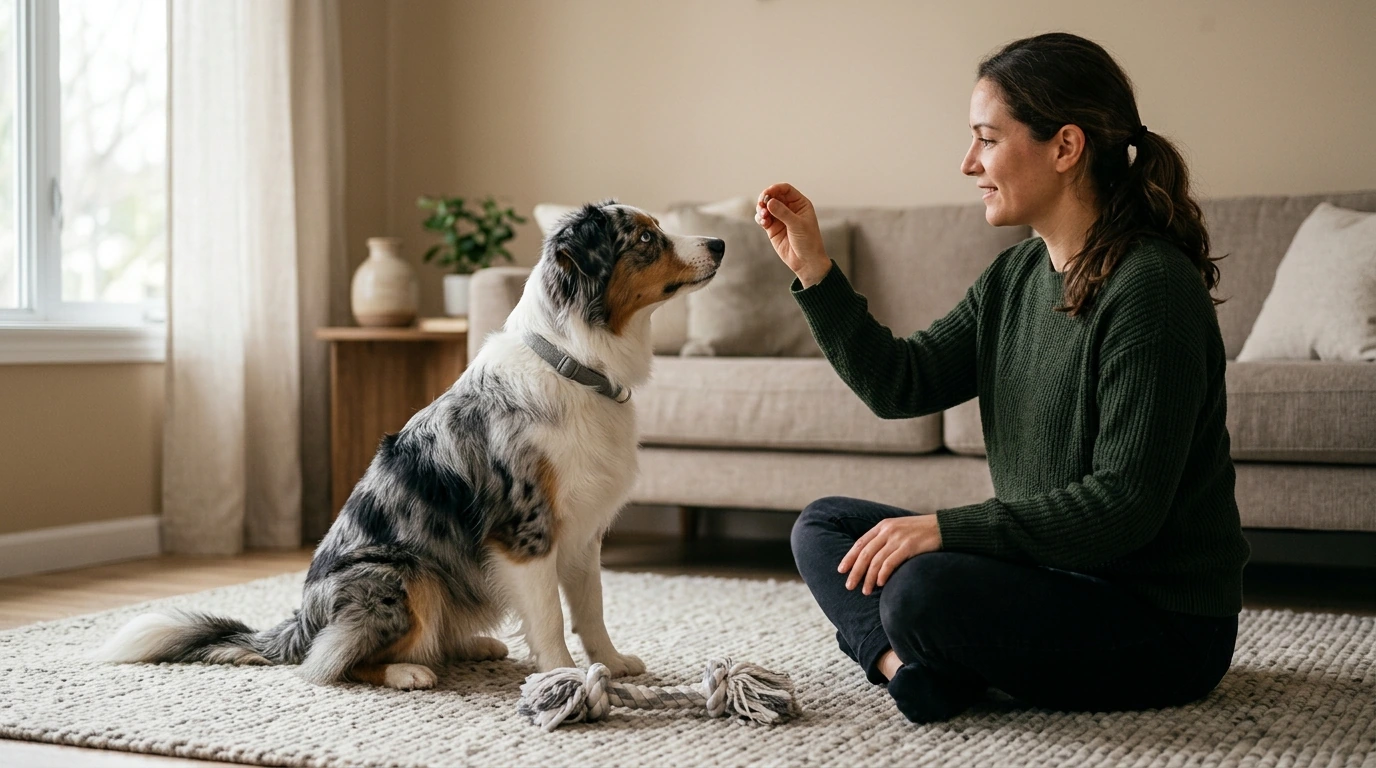
Some dogs treat toys like treasure—and once it’s in their mouth, it’s a full negotiation. A reliable “drop” isn’t about winning a tug-of-war; it’s about building a calm habit that keeps play fun and prevents problems like guarding, accidental nips, and the end-of-play chase. Our team uses a simple, repeatable checklist approach so “drop” becomes easy for your dog to understand and easy for you to practice. For more guidance, see Dogs and Babies.
What “Drop” Really Means (and why it matters during play)
“Drop” is a cue to release what’s in the mouth and disengage—without stress, scolding, or grabbing. When you teach it as a predictable routine (release → reward → play can continue), you reduce frantic hands-near-teeth moments during tug and fetch. You also help prevent resource guarding patterns by showing your dog that letting go makes good things happen. For further reading, see DOG TRAINING CHECKLIST.
It’s also worth separating similar cues: “leave it” means don’t take it, while “give/bring” means return it toward you or to hand. Once your dog understands the release itself, you can layer those other skills more easily.
| Situation | Best cue | What to reward | Common mistake to avoid |
|---|---|---|---|
| Dog already has the toy and won’t release | Drop | Release + calm pause | Prying the mouth open |
| Dog is about to grab something | Leave it | Looking away / choosing not to take | Repeating the cue while the dog is already grabbing |
| Dog releases but won’t return the toy | Bring / Give | Coming back toward you with the toy | Chasing the dog (turns it into a game) |
| Dog drops the toy then re-grabs instantly | Drop + wait | Release and staying off the toy briefly | Rewarding while the dog is diving back in |
Set up success: the simplest training environment
Start with a medium-value toy—not your dog’s “forever favorite.” For rewards, use something your dog values more than the toy (tiny, soft treats are usually ideal), and keep portions small so you can pay often without overfeeding.
Choose a quiet room first. We recommend short sessions (2–5 minutes, 1–3 times per day) and stopping while your dog is still successful and upbeat. If your dog prefers toy trades over food, keep a second toy ready so you can swap in a way that feels like a win, not a loss.
The core checklist: teach “drop” in clear, repeatable steps
This is the sequence our team sticks to so you don’t accidentally skip the parts that build trust.
Step-by-step routine
A simple practice ladder (progress only when success is easy)
| Level | Goal | What you do | When to move on |
|---|---|---|---|
| 1 | Release with visible treat | Treat to nose → mark → reward → return toy | 8/10 releases within 2 seconds |
| 2 | Release when cue is said | Say “Drop” → treat appears → mark → reward | 8/10 releases after the cue |
| 3 | Release with treat hidden | Say “Drop” → hand goes to pocket → mark → reward | Dog releases without seeing treat first |
| 4 | Release during mild excitement | Short tug/fetch → “Drop” → reward → resume play | Dog can switch from play to release calmly |
| 5 | Release with distractions | Practice in yard/on walks with safe items | Dog releases even when environment is interesting |
Timing and mechanics that make “drop” click faster
Troubleshooting: when your dog won’t drop, grabs again, or plays keep-away
| Problem | Likely cause | Adjustment to try next session |
|---|---|---|
| Dog ignores cue | Cue was added too early | Go back to trading first, then re-add the cue |
| Dog gets mouthy at hands | Over-arousal during tug | Shorten tug, use a longer toy, reward calm releases |
| Dog drops but seems worried | Toy removal feels like loss | Trade + immediate return of toy, softer handling |
| Dog only drops with treat visible | Lure dependence | Hide treats; reward from pocket after the release |
Make it real: where to practice so “drop” works everywhere
Use the printable checklist to stay consistent (and track progress)
If you want a structured way to stay on sequence, our team made a simple digital tool you can keep on your phone or print for the fridge: The Checklist to Teach Your Dog to Drop Toys – Best Way to Teach Your Dog to Drop Toys. Use it to track success rate (out of 10), the toy you used, the reward you used, and where you practiced—those details usually explain plateaus fast.
Consistency is easier when you’re not trying to remember every step mid-play. If you also like checklists for your own routines, we also keep a separate digital guide for winding down and staying consistent at night: AI-Powered Checklist for Better Sleep Adventures | Digital Sleep Guide for Relaxation, Lucid Dreaming & ai suggestions for better dreams.
For deeper behavior and safety context, we trust these reward-based references: ASPCA guidance on resource guarding and the AKC’s “Drop It” training overview.
FAQ
How long does it take to teach a reliable “drop”?
Many dogs improve in a few days, but reliability typically takes a few weeks of short, consistent practice. Use an “8 out of 10 reps” rule before you add distractions or excitement so you don’t build shaky habits.
Should “drop” always mean the game ends?
No—most training reps should lead right back to fun (reward, then give the toy back or restart play) so your dog trusts the cue. Sometimes play has to end, but that should be the exception, not the pattern during practice.
What if my dog growls when asked to drop a toy?
Don’t punish, scold, or try to pry the toy away. Create more space, switch to low-pressure trading with lower-value items, and get help from a qualified trainer or behavior professional if guarding is showing up.







Leave a comment