Cotton Waffle Weave Dish Cloths: Quick-Dry 6-Pack
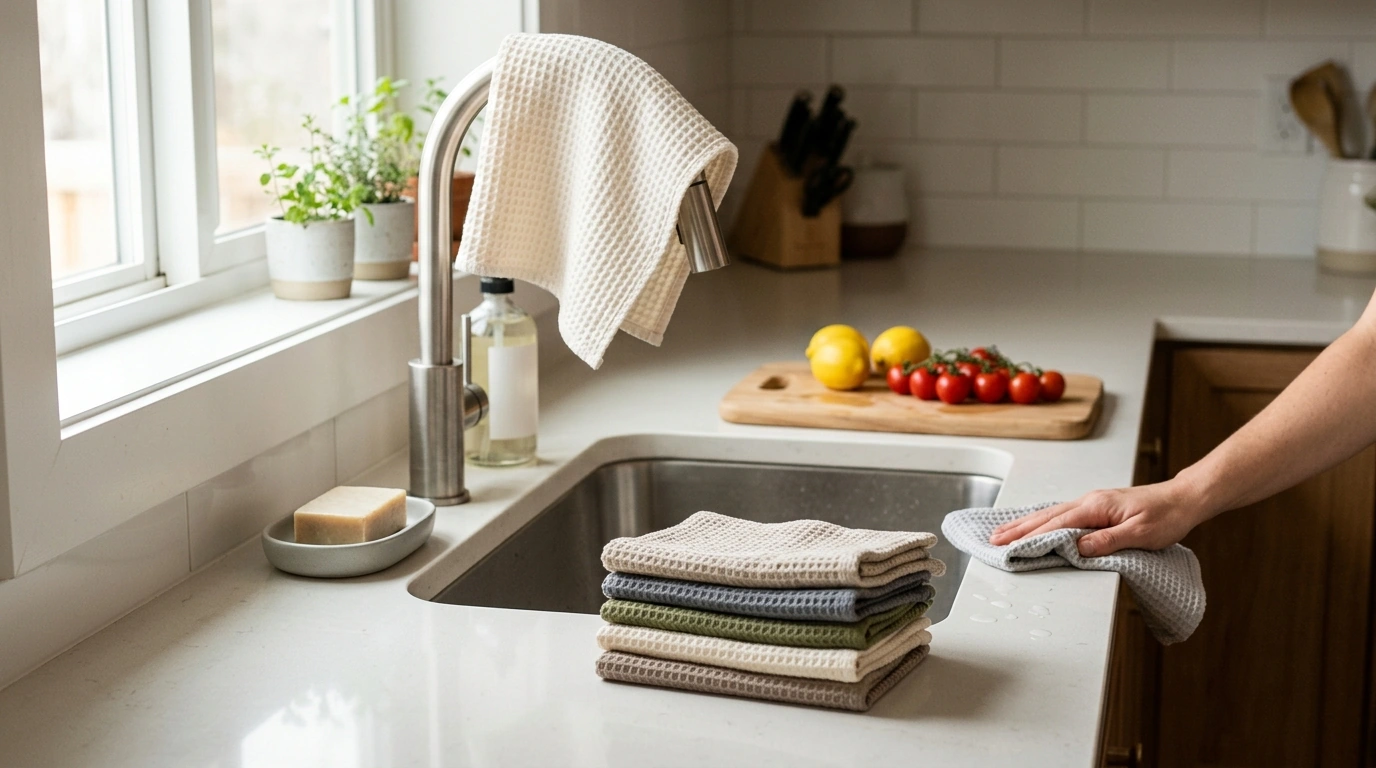
100% Cotton Waffle Weave Dish Cloths: Absorbent, Quick-Drying Kitchen Towels in a 6-Pack
Waffle weave cotton dish cloths are built for everyday kitchen jobs where fast absorption and faster drying matter—wiping counters, tackling spills, rinsing produce, and hand-drying dishes without leaving lingering damp fabric in the sink. A 6-pack makes it easy to rotate cloths through the day and keep a fresh one within reach, whether you cook occasionally or run a busy kitchen from morning coffee to evening cleanup.
What makes waffle weave cotton different
At a glance, waffle weave looks like a grid of small squares. That texture isn’t just for style—it changes how the cloth behaves during real kitchen use.
- Waffle pockets help manage moisture: The raised texture creates small pockets that pull in water and help air circulate, supporting quicker drying between uses.
- 100% cotton absorbency: Cotton is naturally absorbent and typically comfortable to grip, even when wet, making it a practical choice for frequent rinsing and wringing.
- Helpful texture without stiffness: The weave can lift light messes from surfaces while staying flexible enough to press into corners, around faucet bases, and along backsplash edges.
- Better task separation with multiples: Multiple cloths in a set supports separation of tasks (dishes vs. counters vs. produce) to reduce cross-use in the kitchen.
Everyday kitchen jobs these cloths handle well
Waffle weave dish cloths shine in the “in-between” moments—small spills, quick wipe-ups, and frequent hand drying that happens while cooking.
- Dishwashing support: Use as a companion towel for quick wipe-downs and drying hands while cooking, without reaching for a larger towel each time.
- Counter and stovetop wipe-ups: The textured weave helps catch crumbs and light splashes; rinse and wring clean quickly so the cloth doesn’t stay loaded with residue.
- Sink and faucet polishing: After rinsing, a quick pass helps reduce water spotting on stainless fixtures and around handles.
- Produce rinsing and drying: Pat greens, berries, or washed fruit with a clean cloth dedicated to food-prep tasks, keeping it separate from general cleaning cloths.
- Hot-handle helper (short contact): Fold into layers for brief handling—avoid prolonged contact and always keep safety in mind around open heat.
For food safety basics (including clean surfaces and avoiding cross-contamination), the CDC’s guidance is a useful reference: https://www.cdc.gov/food-safety/index.html.
Quick-drying benefits for freshness and convenience
When a dish cloth dries faster, it’s easier to keep your sink area feeling tidy and reduce that “always damp towel” problem.
- Less lingering dampness: Faster dry time can mean less moisture sitting in the fabric between uses, especially when the cloth is hung open rather than left crumpled on the counter.
- Smoother rotation: A quick-drying cloth is easier to cycle through tasks: use, rinse, wring, hang, and grab a fresh one when needed.
- Better flow in busy kitchens: Less time waiting for a towel to feel dry enough for the next job.
- Ideal for small spaces: Dish cloths that dry efficiently are easier to manage in apartments, dorm kitchens, and RVs with limited airflow.
For general cotton care guidance (washing, drying, and fiber characteristics), Cotton Incorporated offers helpful resources: https://www.cottoninc.com/.
6-pack rotation system for a cleaner workflow
A six-pack is more than “extras in the drawer”—it can simplify habits so you always have a clean cloth ready for the right job.
- Create a simple routine: Use a color- or location-based system: one cloth for counters, one for dishes, one for produce, one for quick hand-drying, and keep two clean in reserve.
- Swap sooner, not later: Replace mid-day when cloths become saturated or pick up odors—having multiples reduces the temptation to “make it last” too long.
- Set a wash cadence: Collect used cloths in a small mesh bag or bin, then launder on a regular schedule so they don’t sit damp in a pile.
- Make it easy for shared kitchens: If multiple people cook, keep one cloth designated for each frequent cook to simplify habits and reduce mix-ups.
Care and washing tips to keep cotton towels performing
Waffle weave cotton holds up well with routine care. The biggest performance boosters are thorough rinsing, proper drying, and avoiding residue buildup.
Choosing between cotton waffle weave, terry, and microfiber
| Cloth type | Best for | Drying speed | Feel/texture |
|---|---|---|---|
| Cotton waffle weave | Daily wipe-downs, light dish drying, quick rotation | Fast | Textured, flexible |
| Cotton terry | Big spills, heavy absorption, thicker hand towel tasks | Moderate to slow | Plush, looped |
| Microfiber | Polishing, glass, fine dust pickup | Fast | Smooth to lightly textured |
Product snapshot: 100% Cotton Waffle Weave Kitchen Dish Cloths (6-Pack)
100% Cotton Waffle Weave Kitchen Dish Cloths, Absorbent Quick Drying Towels, 6-Pack
More in-stock picks
- Men’s Quick-Dry Short Sleeve Sports Shirt – Lightweight Workout & Running Top
- 16″ Rivet Nut Tool Kit with 11 Mandrels & 185pcs Rivnuts Assortment
FAQ
Do waffle weave dish cloths absorb well even though they feel lighter?
Yes. The waffle pockets add surface area that helps pull in water, and cotton remains naturally absorbent. Absorbency often improves after a first wash or two, and it can drop if fabric softener residue builds up.
How often should kitchen dish cloths be changed?
Change them anytime they’re saturated, after wiping raw-meat juices, or when odor appears. For general cooking and cleanup, swapping daily (or every 1–2 days) works well, especially when you keep separate cloths for dishes, counters, and produce.
What’s the best way to keep dish cloths from smelling musty?
Rinse, wring thoroughly, and hang the cloth open so it dries fully between uses. Avoid leaving damp cloths in a pile, and launder frequently—an occasional hot wash (as appropriate for the load) can also help reset freshness.









Leave a comment