Indoor Cat Enrichment: DIY Toys, Play Routines & Home Tips
Enrichment Ideas for Indoor Cats: DIY Toys, Daily Play Routines, and Cat-Friendly Home Tips
Indoor cats thrive when their day includes hunting-style play, choices of safe climbing and hiding spots, and small problem-solving moments that replace boredom with purpose. With a few simple habits—and a little “set it and forget it” home setup—enrichment becomes something your cat can access all day, not just when you’re holding a toy.
The goal isn’t constant entertainment. It’s giving your cat the right outlets for natural behaviors and a predictable rhythm that helps them feel confident, curious, and calm.
What “enrichment” means for an indoor cat
Enrichment is anything that safely lets a cat act like a cat. Think of it as meeting needs, not just providing noise or movement.
- Focus on natural behaviors: stalking, pouncing, climbing, scratching, chewing, and scent exploration.
- Balance stimulation and rest: short, frequent sessions usually work better than long play marathons.
- Watch body language: tail lashing, ears back, sudden hiding, or swatting can mean the activity is too intense or unpredictable.
- Use variety: rotate toys and setups to keep novelty without constantly buying new items.
For more behavior context, the American Association of Feline Practitioners (AAFP) Feline Behavior Guidelines and International Cat Care are excellent references.
The five pillars of indoor cat enrichment
When enrichment feels “hit or miss,” it often helps to spread effort across a few categories instead of leaning on one toy or one type of play.
- Play (predatory sequence): stalk → chase → pounce → “catch” → snack or calm-down.
- Food enrichment: puzzle feeders, scatter feeding, lick mats, and simple “foraging” stations.
- Physical environment: vertical territory, window perches, hiding caves, and safe scratching options.
- Sensory enrichment: scent trails, cat-safe plants, sound variety, and visual stimulation.
- Social enrichment: predictable attention, cooperative play, and respecting alone-time boundaries.
DIY toys that feel like real “prey”
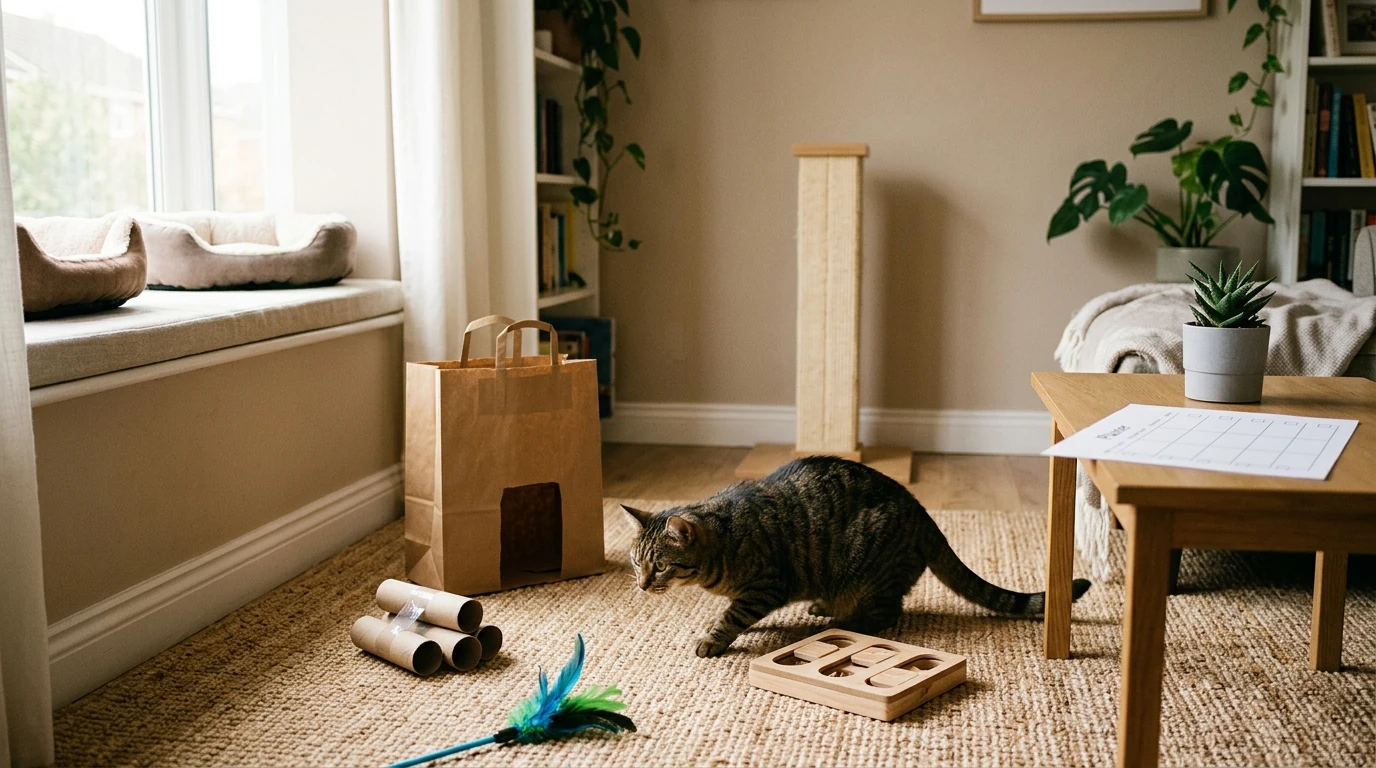
DIY doesn’t need to mean flimsy. The best homemade toys mimic prey size, texture, and movement—while staying safe and supervised during early tries.
- Sock “kicker” toy: Fill a clean sock with fabric scraps. Add a pinch of catnip or silvervine (only if your cat responds well), tie a tight knot, and supervise early use.
- Cardboard “mouse” rolls: Cut a toilet paper tube into rings, tuck a treat inside, then fold the ends to make a small parcel for batting.
- Paper-bag hide-and-seek: Lay a paper bag on its side, cut a few small peek holes, remove handles, and use a wand toy nearby to encourage stalking.
- Crinkle tunnel on a budget: Wrap kraft paper around a box with open ends to create a run-through corridor.
- Ice “hunt” for confident cats: Freeze a few treats in a shallow dish and serve on a towel for traction and easier cleanup.
Safety note: avoid leaving strings, ribbons, or small parts unattended. If something can be swallowed or wrapped around a limb, it’s a supervised-only toy.
Simple play routines that reduce zoomies and boredom
Many indoor cats do best with “micro-sessions” that match their natural burst-and-rest rhythm.
7-Day Indoor Cat Enrichment Plan (Rotate and Repeat)
| Day | Play Focus (5–10 min) | Food/Foraging | Home Setup Idea |
|---|---|---|---|
| Mon | Wand toy: hide-and-dart | Scatter a few kibble pieces in 2 rooms | Add a new cardboard box with a blanket |
| Tue | Ball track or ping-pong chase | Treat parcel in a paper tube | Move a cat tree near a window perch |
| Wed | “Bird” play: jumps to a teaser | Puzzle feeder for 1 meal | Create a quiet hideout (chair + drape) |
| Thu | Kicker toy wrestling | Lick mat or wet food on a plate | Add a second scratcher in a new spot |
| Fri | Laser only with a “catch” toy at the end | Forage trail: 5–10 treats along a path | Open blinds for safe window viewing time |
| Sat | Two-toy session: chase then pounce | Snuffle-style towel fold with kibble | Scent swap: rub cloth on safe surfaces, place near bed |
| Sun | Low-arousal “mouse” drag | Easy puzzle (cup over treat) to finish | Reset: put half the toys away for next week |
Cat-friendly home tips: make the space do the work
Calm enrichment for shy, anxious, or easily overstimulated cats
Troubleshooting common indoor-cat challenges
If your cat’s activity level drops suddenly (or play seems painful), a vet check is a good next step. The ASPCA cat care resources can also help you spot when behavior changes may need professional support.
Using a printable guide to stay consistent
If you’d like a ready-to-use routine you can print or save, try the Printable Cat Enrichment Guide with DIY toys, play routines, and home tips.
For owners who enjoy structured checklists and habit-building, the AI-Powered Checklist for Better Sleep Adventures can also be a helpful way to keep evenings calmer and more consistent—especially if your cat’s routine affects your sleep schedule.
FAQ
How much play time does an indoor cat need each day?
Many adult indoor cats do well with about 15–30 minutes total per day, split into short sessions. Kittens usually need more frequent play, while seniors may prefer gentler, shorter bursts. Ending play with a small snack often helps your cat settle.
What are safe DIY enrichment ideas that don’t require buying new toys?
Try cardboard boxes, paper bags with handles removed, towel “kibble foraging” folds, paper-tube treat parcels, and a supervised sock kicker toy. Avoid unsupervised string/ribbon toys, and skip anything small enough to swallow.
Why does my cat lose interest in toys so quickly?
Many cats get bored once the “hunt” feels predictable. Rotate toys weekly, change how you move the toy (pause, hide, dart), and keep sessions short with a small reward at the end. If interest drops suddenly along with overall activity, consider a vet visit to rule out discomfort.









Leave a comment