Wooden Baby Rattles: Benefits, Safety & Care

Are wooden rattles good for babies?
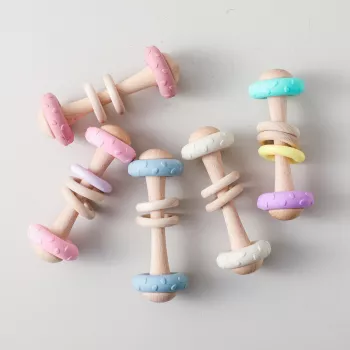
Yes. A well-made wooden rattle can be a good sensory toy for a baby when it is designed for the child’s age and used with supervision. Its gentle sound gives babies something to listen to, while grasping and shaking it can encourage early hand control and curiosity.
What to look for in a wooden rattle
Choose a rattle made specifically for infants, with a shape that is easy for little hands to hold. Check that the wood is smooth, the finish is labeled nontoxic, and all pieces are firmly attached. Avoid rattles with cracks, splinters, sharp edges, loose components, or parts small enough to pose a choking risk. Follow the manufacturer’s age recommendations and care instructions.
Are wooden rattles safe for teething?
Some babies may mouth a rattle, but a wooden toy should not automatically be treated as a teether. Wood is harder than many purpose-made teething toys, so supervise closely and take the rattle away if it becomes damaged. For teething relief, choose a product specifically labeled for that purpose and follow its directions.
How should you use one?
Offer the rattle during awake, supervised play. Let your baby explore it while you stay close, and inspect it regularly for wear or damage. Don’t attach it to a baby’s neck, clothing, crib, or sleep space, where cords or loose items can create hazards. Put it away if the finish starts peeling or the wood develops rough spots.
Wooden rattles can be a simple, engaging option, but the material alone doesn’t determine whether a toy is safe. Construction, age suitability, condition, and supervision matter. For a closer look at how wooden rattles compare with silicone teether rings and other Montessori-style toys, visit the wooden rattle and silicone teether ring guide.
FAQ
How do you clean a wooden baby rattle?
Wipe it with a damp cloth and mild soap, then dry it promptly. Avoid soaking or boiling the rattle unless the manufacturer says that method is safe, since excess moisture can damage wood or its finish.








Leave a comment