Waffle Weave Towels: Absorbency vs Terry Cloth
Are waffle weave towels more absorbent?
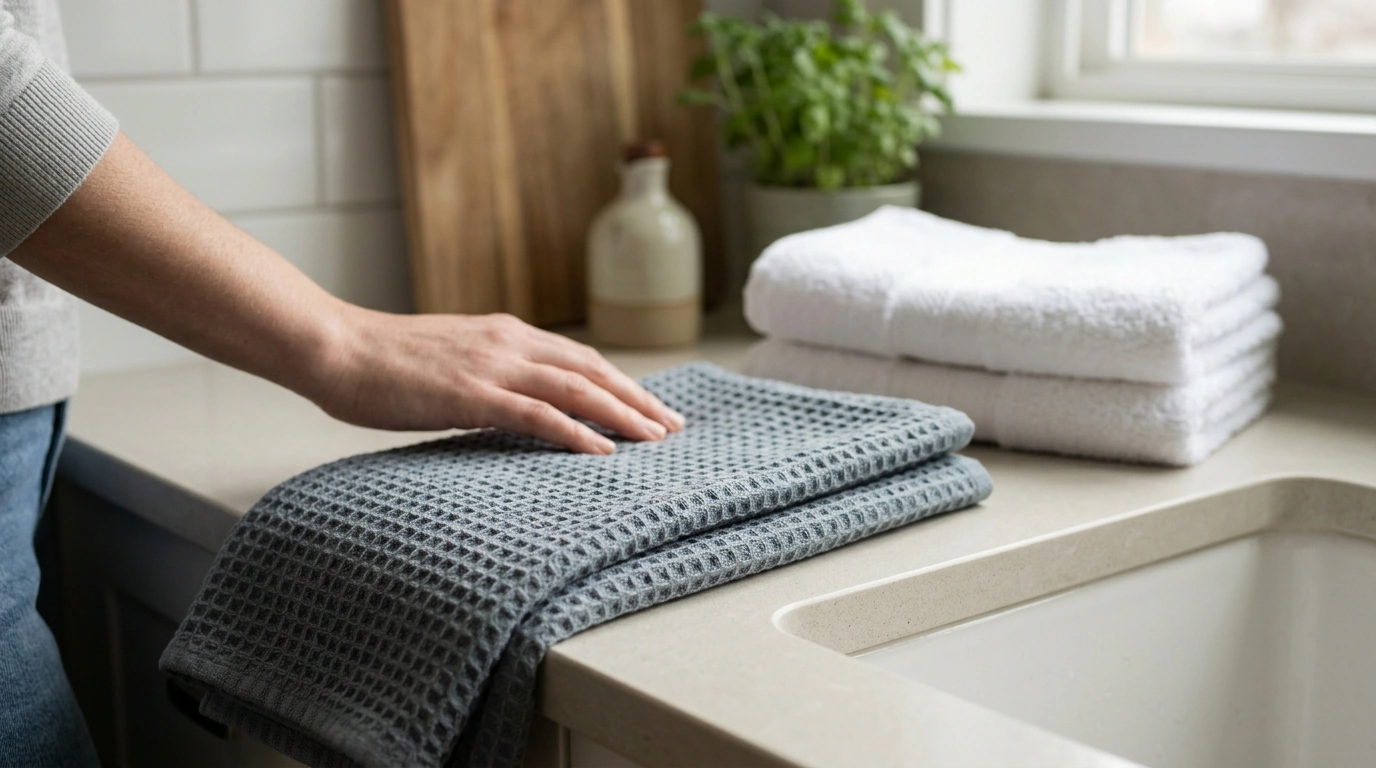
Waffle weave towels can be very absorbent, but “more absorbent” depends on what they’re compared to and how they’re used. The signature grid pattern creates extra surface area and small pockets that help pull in water quickly, which is why waffle weaves often feel like they “grab” moisture faster than flat weaves. They also tend to rinse out easily and dry quickly, so they’re ready for the next task without staying damp for long.
That said, a thick terry towel can still hold more total water simply because it has more material and looped pile to store moisture. Waffle weave usually wins on fast pickup and quick drying rather than maximum soak-it-all capacity. For everyday kitchen jobs—drying dishes, wiping counters, handling condensation—waffle weave often feels more efficient because it absorbs promptly and doesn’t get heavy or swampy.
What makes waffle weave absorbent?
The raised-and-recessed texture increases contact points and channels water into the “cells” of the weave. With cotton waffle weave, those fibers naturally absorb moisture, while the texture improves how quickly water spreads through the cloth. Over time and with proper washing, the fabric typically becomes even better at absorbing as finishes wash out and fibers relax.
When waffle weave is the better choice
Waffle weave towels shine when speed and cleanliness matter: drying glassware with fewer streaks, wiping up small spills, or keeping a dish cloth that dries between uses. They’re also a smart pick for compact storage, since they’re lighter and less bulky than plush towels.
For a deeper look at how cotton waffle weave performs and what to expect from quick-dry dish cloths, visit this quick-dry cotton waffle weave guide.
For Waffle Weave Towels: Absorbency vs Terry Cloth, the best answer depends on fit, material, care instructions, and how the product will be used day to day.
FAQ
Do waffle weave towels dry faster than terry cloth?
Often, yes. Waffle weave is usually thinner and more breathable, so it releases moisture quickly and is less likely to stay damp between uses.









Leave a comment