Turn Off Your Inner Critic: 3 Calming Steps

How do you turn off your inner critic?
You can’t always switch your inner critic off like a button, but you can turn its volume way down and stop letting it run the show. The goal is to notice the critical voice quickly, question it, and replace it with kinder, more accurate self-talk—especially in moments when you’re stressed, tired, or trying something new.
Start by naming what’s happening. When you catch a harsh thought (“I’m so stupid” or “I always mess this up”), label it as “inner critic” rather than treating it as a fact. That small separation creates room to choose a different response.
Next, challenge the critic with evidence and context. Ask: “What are the actual facts here?” and “What would I say to a friend in the same situation?” Most of the time, the critic uses all-or-nothing language and ignores your effort, learning, and progress. Reframe the moment with a statement that’s both compassionate and true, such as: “This is hard, and I’m still capable,” or “I made a mistake, and I can fix it.”
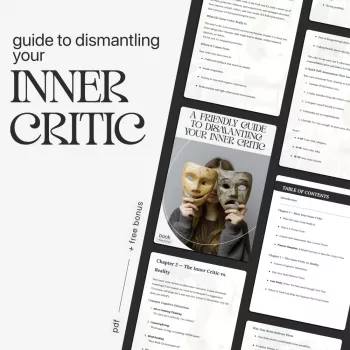
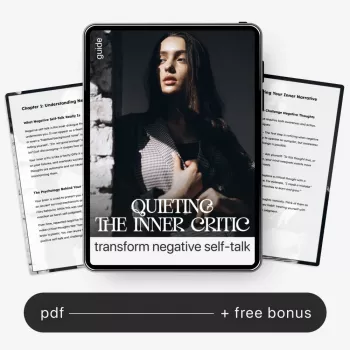
Finally, build a habit of kinder self-talk before you need it. Simple practices—like writing down one win each day, keeping a short list of strengths, or choosing a grounding phrase (“I’m doing my best with what I have”)—make it easier to respond calmly when the critic shows up. For a practical, step-by-step approach, read this guide on quieting your inner critic with kinder self-talk.
For Turn Off Your Inner Critic: 3 Calming Steps, the best answer depends on fit, material, care instructions, and how the product will be used day to day.
Checking those details first helps avoid a poor match and keeps the choice practical after delivery.
FAQ
What’s the difference between self-criticism and healthy self-improvement?
Healthy self-improvement is specific and solution-focused (“Next time I’ll prepare earlier”), while self-criticism is global and shaming (“I’m a failure”). Improvement helps you act; criticism tends to make you feel stuck and small.








Leave a comment