4-Piece Flare Nut Wrench Set: Cr-V, 15° Offset
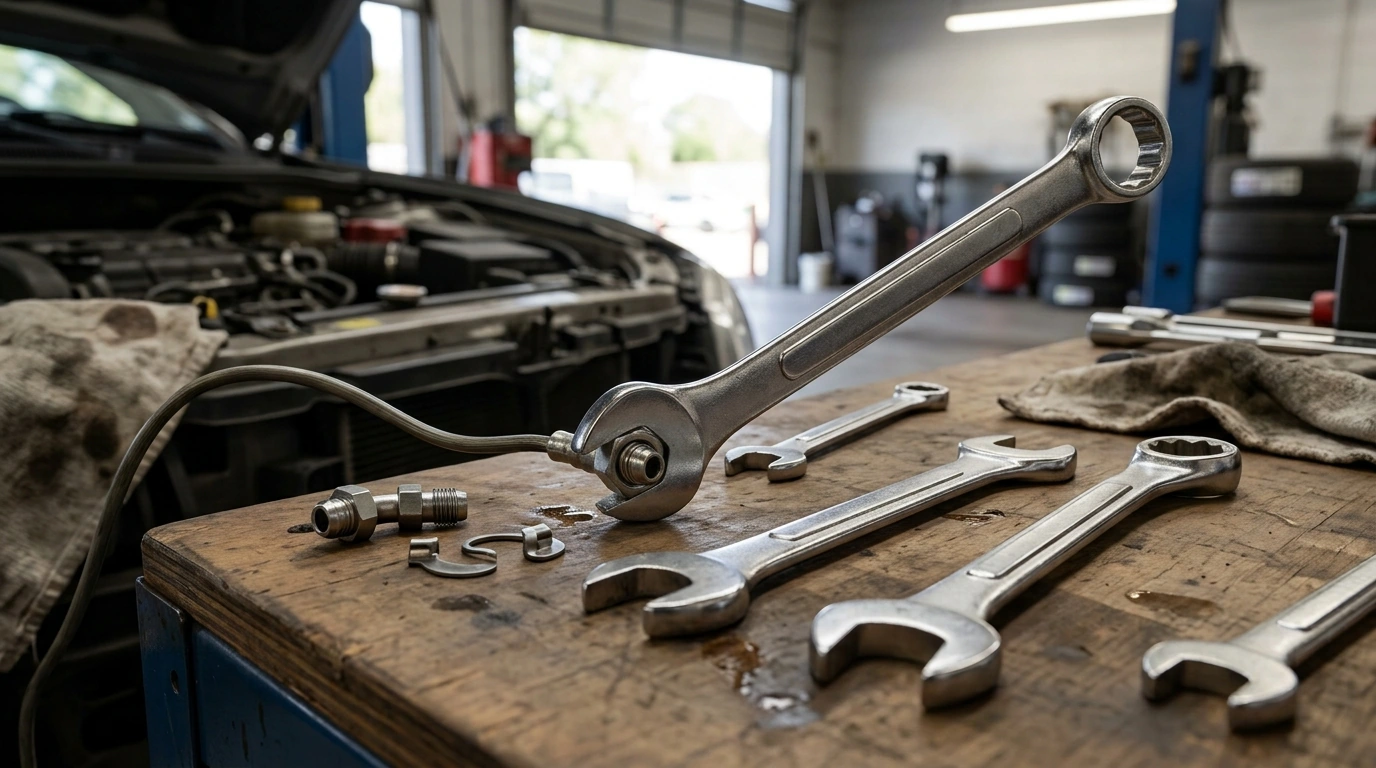
4-Piece Flare Nut Wrench Set (SAE/Metric) in Cr-V Steel with 15° Offset
Flare nut wrenches are built to grip tubing fittings with more contact than a standard open-end wrench, helping reduce rounding on brake, fuel, transmission, and A/C line nuts. This 4-piece SAE/Metric set uses Cr-V steel and a 15° offset design to improve access around obstacles and tight engine bays. If line work is part of your routine—whether it’s a quick brake hose swap or chasing a seep at a cooler line—using the right wrench often means the difference between a clean loosen-and-tighten and an expensive, time-consuming repair.
What This Set Is Made For
- Brake line fittings, bleeder-related line work, and other hydraulic tubing connections
- Fuel and power steering lines where fittings seize from heat cycles and corrosion
- Transmission cooler lines and similar thin-walled flare nuts
- A/C line service where space is limited and fasteners are soft
- General tubing work on vehicles, motorcycles, and shop equipment
Because the line passes through the nut, a socket can’t clamp around it. That’s where a flare nut wrench earns its spot in the drawer—especially on older vehicles where corrosion and previous over-tightening are common.
Why Flare Nut Wrenches Help Prevent Rounded Fittings
- More contact area than a typical open-end wrench, distributing force around the nut
- Better control during breakaway torque on stuck fittings
- Useful when a socket can’t be used because the line passes through the fitting
- Often the difference between loosening a fitting cleanly and damaging it
On many brake and fuel fittings, the nut material is softer than surrounding components, and the corners can deform quickly. A flare nut wrench wraps around more sides of the nut, helping keep the wrench from camming off during the first “crack” when corrosion fights back.
15° Offset Design: Clearance Where Straight Wrenches Struggle
- Offset heads help reach fittings tucked behind brackets, frame rails, or manifolds
- Improves knuckle clearance and wrist angle in crowded bays
- Allows repositioning without removing nearby components in many situations
- Pairs well with short pulls and incremental movement on seized hardware
The 15° offset is a small geometry change that matters in real-world service. It can let you keep the wrench engaged while clearing a hard line, a mounting tab, or a heat shield—reducing the temptation to use pliers or an ill-fitting open-end wrench.
Cr-V Steel Construction and What It Means in Use
- Chromium-vanadium steel is commonly used for hand tools that need strength and wear resistance
- Holds up to repeated tightening/loosening cycles and typical shop impacts (drops, contact wear)
- Best practice: keep jaws fully seated on the nut and pull smoothly to reduce slip
- After use on brake fluid or chemicals, wipe clean to reduce surface corrosion over time
Even a strong tool can slip if it’s not seated squarely. Take a moment to align the wrench so the jaws sit flat on the nut. If access is awkward, reposition until you can apply force in a controlled arc rather than at an angle.
At-a-Glance Comparison: Flare Nut vs Open-End vs Crowfoot
Different line-service jobs call for different tools. Use this quick comparison to choose the safest option for the fitting and the amount of access you have.
| Situation | Best choice | Why it helps | Watch-outs |
|---|---|---|---|
| Soft flare nut on brake line | Flare nut wrench | More grip surface reduces rounding | Ensure full seating; avoid angled pulls |
| Fastener has lots of clearance | Open-end wrench | Quick engagement and repositioning | Higher chance of slipping on tight/stuck fittings |
| Needs torque spec with limited access | Crowfoot + torque wrench | Can apply measured torque where sockets won’t fit | Torque math may be needed depending on crowfoot orientation |
| Extremely seized fitting | Flare nut wrench + penetrating oil | Controlled breakaway with better contact | Heat and line damage risk; proceed carefully |
For general wrench handling and safety habits, reference established shop practices such as those summarized by Craftsman Book Company. For broader automotive service context and technical resources, SAE International is a widely recognized source.
How to Use Flare Nut Wrenches on Stuck Line Fittings
Care, Storage, and Long-Term Fit
Product Options In Stock
- 4pcs Flare Nut Wrench Set SAE/Metric – Cr-V Steel Tubing Wrenches with 15° Offset (In Stock): a compact set for common tubing-fitting service with improved access from the offset heads.
- 16″ Rivet Nut Tool Kit with 11 Mandrels & 185pcs Rivnuts Assortment (In Stock): a useful companion for shop and fabrication work when you need to add strong threaded mounting points for brackets, line clamps, shields, and accessories.
FAQ
What is a flare nut wrench used for?
A flare nut wrench is used to loosen and tighten tubing fittings where the line passes through the nut, such as brake, fuel, transmission cooler, and A/C connections. It grips more sides of the nut than a standard open-end wrench to help reduce rounding.
Are flare nut wrenches better than open-end wrenches for brake lines?
Yes, flare nut wrenches are usually the better choice for brake line fittings because they provide more contact and control on tight or stuck flare nuts. Proper seating and smooth, steady pressure are still important to prevent slipping.
How do I keep from rounding a brake line fitting?
Clean the fitting, apply penetrating oil, and fully seat the flare nut wrench square to the nut before pulling smoothly. If possible, use a backup wrench on the mating fitting and stop immediately if the line starts to twist.









Leave a comment