Choose the Right Telescope Aperture for Planet Viewing
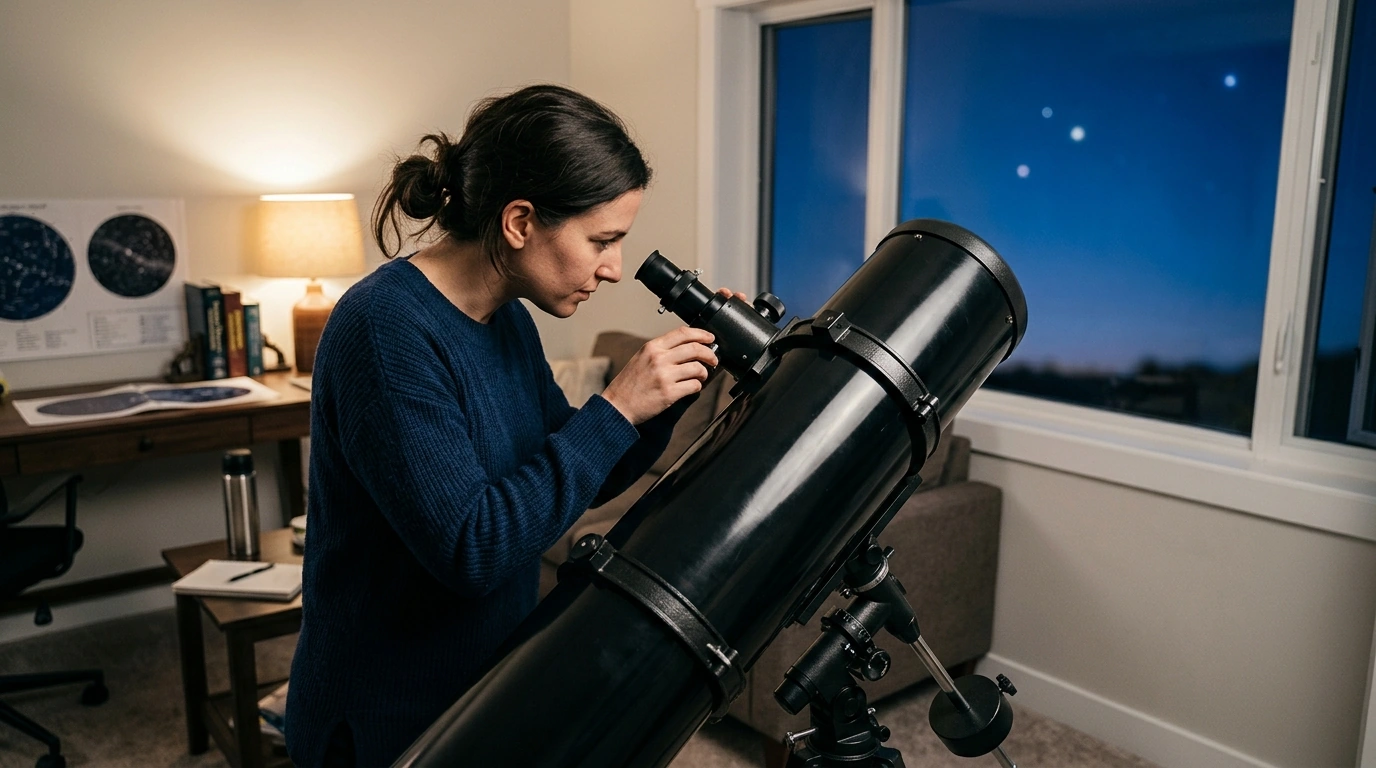
What mm telescope do you need to see planets?
For recognizable views of the planets, a telescope with at least 70–90 mm of aperture can get you started. For more planetary detail, aim for 100–150 mm (about 4–6 inches) of aperture. A larger aperture gathers more light and can reveal finer features when the atmosphere is steady.
Know which millimeter measurement matters
Telescope specifications may list both aperture and focal length in millimeters. Aperture is the diameter of the main lens or mirror, and it is the measurement to prioritize for seeing detail. Focal length affects magnification and the field of view. For example, a telescope labeled 200/2400 mm typically has a 200 mm aperture and a 2400 mm focal length. Our 200–2400 mm telescope guide explains what that combination can show and how to choose targets.
What can different apertures show?
A 70–90 mm telescope can show Jupiter’s four largest moons and Saturn’s rings, along with the planets’ overall shapes. With 100–150 mm of aperture, you may see more structure, such as Jupiter’s cloud bands, Saturn’s ring features, and polar caps on Mars when it is favorably placed. A 150 mm or larger telescope can bring out additional detail, but results still depend on conditions and careful setup.
Choose a stable telescope, not just a high magnification
Planets appear small, so a steady mount matters: shaking makes focusing and observing fine details difficult. A longer focal-length telescope can make it easier to reach useful magnifications with common eyepieces, but magnification alone does not create detail. You can estimate magnification by dividing the telescope’s focal length by the eyepiece’s focal length. For instance, a 1200 mm telescope used with a 10 mm eyepiece gives 120×.
Set realistic expectations for planetary viewing
Start with moderate magnification and increase it only while the image remains sharp. Atmospheric turbulence can blur a planet even through a large telescope, and planets often look best when they are high above the horizon. Let the telescope adjust to outdoor temperatures, focus carefully, and give your eyes time to notice subtle features. For many beginners, a 100–150 mm telescope on a solid mount is a practical balance of detail and ease of use.
FAQ
What accessories help improve planetary viewing?
A stable mount and eyepieces that provide a range of moderate magnifications are the most useful starting points. A collimation tool can also help keep a reflector telescope aligned for a sharper image.









Leave a comment