Perfect Jeans Fit: 60-Second Test, Rise & Stretch Guide
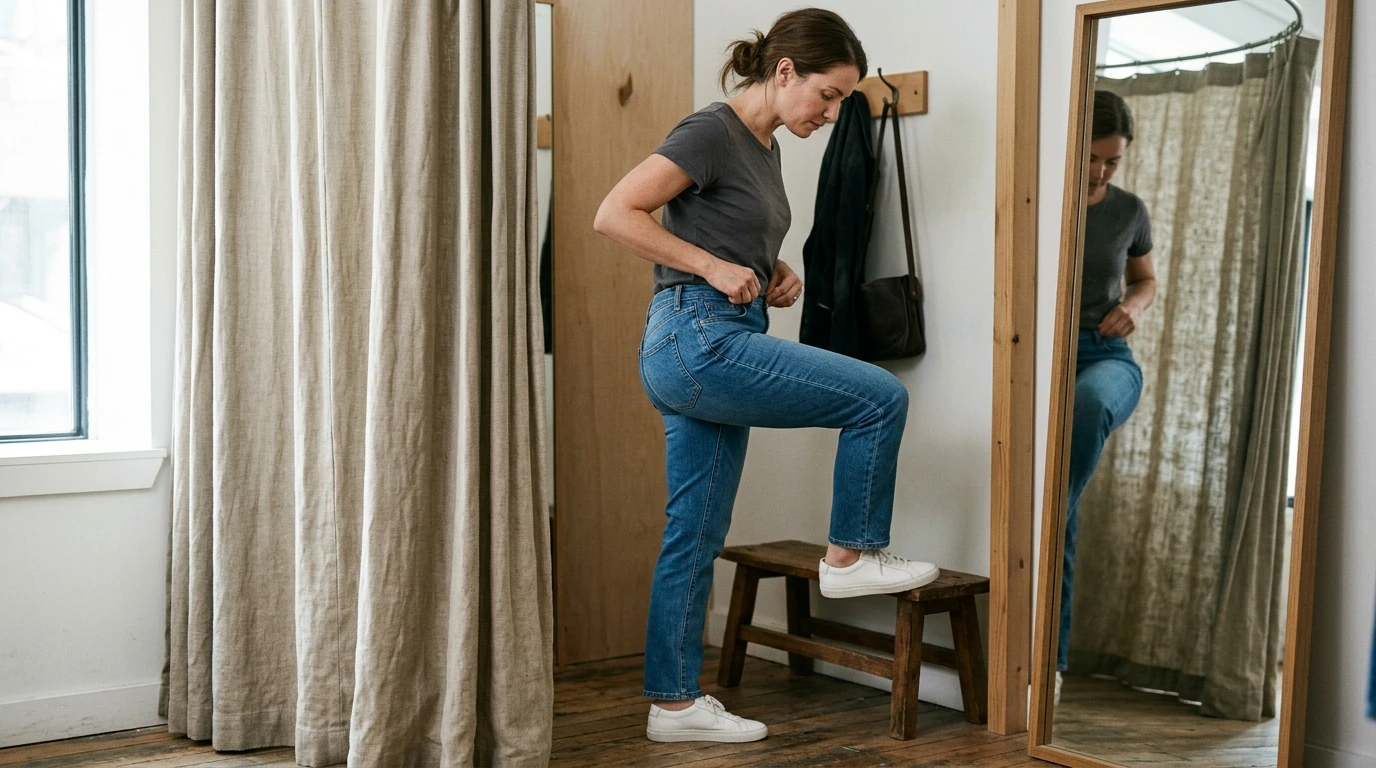
Jean Genius: The Smart Guide to Finding Your Perfect Fit
A great pair of jeans should feel secure without squeezing, sit where it’s meant to sit, and move with you all day. The trick is knowing what to check before you commit—because denim can feel different after an hour of walking, sitting, and warming up. Below are quick fit checks you can do in under a minute, what common fit problems actually mean, and how to match rises, cuts, and stretch to your body and lifestyle.
The 60-Second Fit Test
Use this fast scan in the fitting room (or at home before removing tags). You’re looking for smooth fabric, stable seams, and comfort that holds up when you move—not just when you stand still.
- Waistband: It should stay put when you walk and sit, without digging in or gaping at the back.
- Seat: Fabric should lie smooth across the fullest part; pulling lines from crotch to hips signal tightness.
- Thighs: You should be able to pinch a small amount of fabric; too much pinch usually means bagging later.
- Knees: Minimal wrinkling when standing; excessive “accordion” folds can mean extra length or too much stretch.
- Crotch: No sharp pulling, no excess fabric puddling; the seam should sit close without riding.
- Rise comfort: When seated, the front shouldn’t cut in and the back shouldn’t slide down.
- Movement check: Squat or step up; seams should not strain and the waistband should not roll.
Where Jeans Should Sit: Rise and Placement
Rise affects comfort, coverage, and how often you’ll be tugging at your waistband during the day. The “right” rise is the one that stays where it’s supposed to when you move.
- Low rise: Sits below the natural waist; can feel freer at the midsection but may slip when sitting or bending.
- Mid rise: Typically the most versatile for everyday wear; balances coverage with ease of movement.
- High rise: Sits at or near the natural waist; can feel smooth and secure, but sizing must be right to avoid rib pressure when seated.
- Quick check: If the waistband migrates downward during a short walk, the rise may be too low for your torso or the waist is too large.
- Sit test clue: If the waistband cuts in only when sitting, consider a slightly higher rise or a bit more stretch in the fabric.
Stretch, Fabric Weight, and Why Fit Changes After an Hour
Denim isn’t static. Fiber blends, fabric weight, and daily motion can change how jeans feel from morning to evening. Understanding “relaxation” helps you buy the size that keeps its shape.
- High-stretch denim (often 2%+ elastane): Comfortable fast, but can relax during the day; aim for a snug-but-not-painful initial fit.
- Low-stretch or rigid denim (0–1% elastane): Holds shape better; may feel firm at first and soften with wear.
- Fabric weight: Heavier denim is more structured and durable; lighter denim drapes more and can show fit issues sooner.
- Heat and motion: Sitting, walking, and body warmth can loosen waistband and seat—especially in softer blends.
- Buy for real life: If jeans feel perfect only after “breaking in,” buy for the end-of-day fit, not the fitting-room moment.
For denim care basics that help preserve fit and longevity, see Cotton Incorporated’s denim resources and the FTC guidance on care labeling.
Fit Problems Decoded (and the Most Likely Fix)
Most “bad fit” moments are actually specific, fixable issues. Use the symptom to choose the best next move—different rise, different cut, different fabric, or a quick alteration.
| What you notice | What it usually means | What to try |
|---|---|---|
| Gap at the back waistband | Waist too big for hips or waistband not contoured | Curvy fit, contoured waistband, or tailor the waist |
| Pulling lines across the front hip/crotch | Tight in hips/thighs or rise too short | Roomier thigh cut or higher rise |
| Seat looks loose or sags | Too much room or fabric relaxing | Size down or choose lower-stretch denim |
| Waistband rolls when sitting | Waist too tight or rise hitting an awkward point | Slightly higher rise or different waistband construction |
| Knees get baggy fast | High stretch + extra width at knee | Heavier denim or straighter leg shape |
| Hem stacks heavily on shoes | Inseam too long | Shorter inseam or hemming |
Choosing a Cut That Matches Your Day
Fiber blend and performance details vary across mills and manufacturers; for broader textile fiber context, the International Textile Manufacturers Federation is a helpful reference point.
When Sizing Up, Sizing Down, or Tailoring Makes Sense
A Practical Checklist to Bring to the Fitting Room
Shop Helpful Picks
- Jean Genius: The Smart Guide to Finding Your Perfect Fit – How to Know If Your Jeans Fit Right
- Men’s Quick-Dry Short Sleeve Sports Shirt – Lightweight Workout & Running Top
FAQ
How tight should jeans feel when you first buy them?
Rigid or low-stretch denim should feel firm but not painful and will soften with wear, while high-stretch denim can feel comfy immediately but may relax and get looser. Aim for snug comfort with no sharp pulling at the crotch/hips and no waistband pain when seated.
Why do my jeans gap at the back waist but fit everywhere else?
This usually comes from a bigger hip-to-waist difference than the waistband is shaped for. Curvy fits or contoured waistbands help most, and tailoring the waist is often the cleanest fix—sizing down can create tightness in thighs or the rise.
How do I know if the rise is wrong for me?
Common signs include the waistband sliding down as you walk, the front digging in when you sit, or back coverage feeling too low when you bend. Try a different rise height and re-check placement during a short walk and a sit test.










Leave a comment