Clothing Care Label Symbols: Wash, Dry, Iron & Bleach
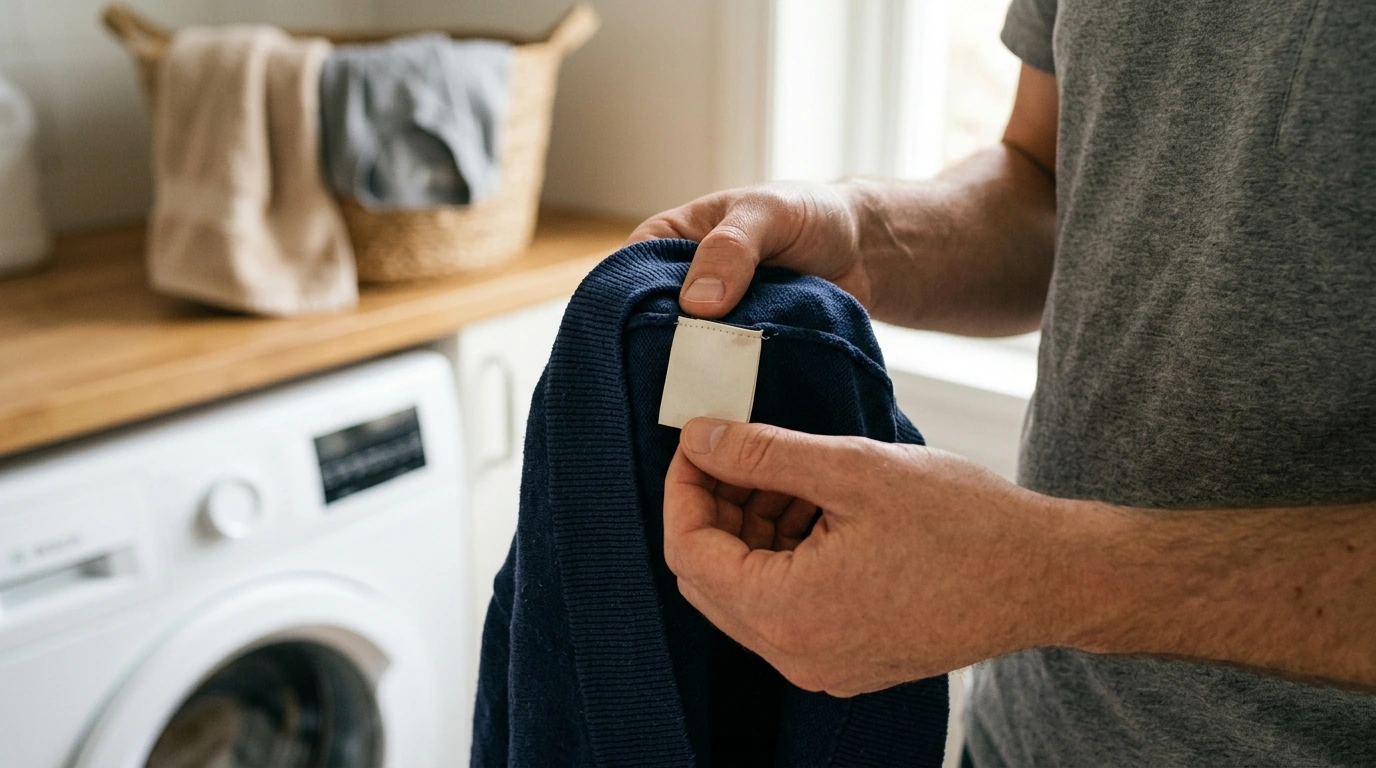
Tag, You’re It! A Smart, Simple Way to Read Clothing Care Labels
Clothing care labels can feel like a secret code—until the symbols start to make sense. Once they do, you can prevent the usual “ruined in the wash” problems: shrinkage, fading, stretching, and that stiff, overheated feel that makes a favorite piece look older than it is. Below is a practical, no-stress guide to the most common wash, dry, bleach, iron, and professional-care icons—plus quick habits that help clothes keep their color, fit, and finish.
Why care labels matter more than the price tag
Care instructions exist to prevent predictable damage: color transfer, pilling, stretched seams, heat shine, and the dreaded one-size-smaller surprise. Most laundry mishaps come down to a mismatch in just one variable—water temperature, agitation level, or dryer heat. When you follow the label, fabrics (especially blends) keep their shape longer, elastics recover better, and a wardrobe stays consistent from wear to wear.
When you’re unsure, the safest default is cooler water, gentler agitation, and lower heat—unless the label specifically calls for something else (for example, a hot wash for sanitation).
The five symbol families found on most labels
Most care tags organize instructions into five “families.” Learn these and you can decode nearly any label in seconds.
| Category | What to look for | What it usually means | Fast safeguard if unsure |
|---|---|---|---|
| Wash (tub) | Dots/number, underline(s), hand | Water temp + cycle intensity; hand-wash if shown | Cold water + gentle cycle |
| Bleach (triangle) | Empty, crossed out, lines | Bleach allowed, not allowed, or non-chlorine only | Skip chlorine bleach; use oxygen bleach only if allowed |
| Dry (square) | Circle inside, dots, crossed out | Tumble dry heat level or avoid tumble drying | Air dry or low heat |
| Iron (iron) | Dots, crossed out, steam lines | Heat level; no iron or no steam if marked | Low heat with pressing cloth |
| Professional (circle) | Letters like P/F/W, crossed out | Dry clean solvent guidance or professional wet clean | Spot test; consider professional cleaning |
For standards and consumer guidance, see the FTC’s care labeling rule (16 CFR Part 423) and the symbol framework used internationally in ISO 3758.
Washing symbols: temperature, cycles, and agitation
The wash tub icon is your “start here.” Dots or numbers indicate temperature; fewer dots generally mean lower heat, while some labels specify exact degrees. Lines under the tub point to gentler cycles: fewer aggressive turns and reduced spin. A hand in the tub means minimal agitation—think “soak + squeeze,” not “scrub + twist.”
If the label says “Do not wash,” water can distort the structure, dissolve finishes, or ripple interlinings. In that case, stick to professional care or carefully limited spot cleaning. When you mix loads, sort around the most delicate item so one piece doesn’t force damage across the entire load.
Drying symbols: shrinkage and shape are decided here
The dryer is where many garments lose the plot—literally. A square icon covers drying, and a circle inside the square indicates tumble drying. Dots inside the tumble-dry symbol usually refer to heat level; low heat is safest for elastics, performance knits, and many blends.
Air-dry options solve different problems: line dry helps reduce wrinkles, drip dry minimizes handling, and dry flat prevents stretching (especially for sweaters and knits). “Do not tumble dry” often isn’t just about heat—tumbling action can pill fabrics, warp seams, and stress adhesives.
A simple upgrade: avoid over-drying. Pull items slightly damp and let them finish air drying to reduce heat stress, static, and set-in wrinkles. For structured garments, reshape seams and hems before they dry so the silhouette stays crisp.
Bleach and stain removal: what “safe” really means
A triangle icon covers bleaching. If it’s crossed out, skip bleach entirely—both chlorine and oxygen-based products can be unsafe depending on dyes and finishes. If it says “non-chlorine bleach only,” oxygen bleach is generally the acceptable option, while chlorine can weaken fibers and cause discoloration.
For everyday stain and wash fundamentals, the American Cleaning Institute’s laundry basics are a reliable reference.
Ironing symbols: preventing shine, scorch, and melt
Fabric-specific label patterns to watch for
A simple routine for decoding labels in under 30 seconds
A quick-reference guide that keeps mistakes off the laundry room schedule
If you want a deeper, easy-to-scan reference, consider Tag, You’re It! The Smart Guide to Reading Clothing Care Labels (eBook).
And for items made with technical materials, it helps to follow performance-friendly habits (cold wash, low heat, skip softener). That’s especially true for workout tops like the Men’s Quick-Dry Short Sleeve Sports Shirt – Lightweight Workout & Running Top.
When to follow the label exactly (and when to be extra gentle)
FAQ
What do the dots on washing, drying, and ironing symbols mean?
Dots usually indicate heat level: fewer dots mean lower temperatures, while more dots mean higher heat. Some labels use numbers to show exact temperatures. When uncertain, choose the lowest heat option to reduce shrinkage and damage.
Is it safe to ignore “do not tumble dry” if the dryer is on low?
It’s still risky because tumbling action and residual heat can shrink, warp, pill, or weaken elastics and adhesives. Air drying (line dry or dry flat) is the safer option when the label prohibits tumble drying.
What should be done if the care label is missing or faded?
Use a conservative routine: cold water, gentle cycle, mild detergent, no bleach, and air dry. If you need stain treatment or heat, test products and methods on an inside seam first to check for fading or texture changes.










Leave a comment