10-Minute Daily Kitchen Reset Checklist (Printable)
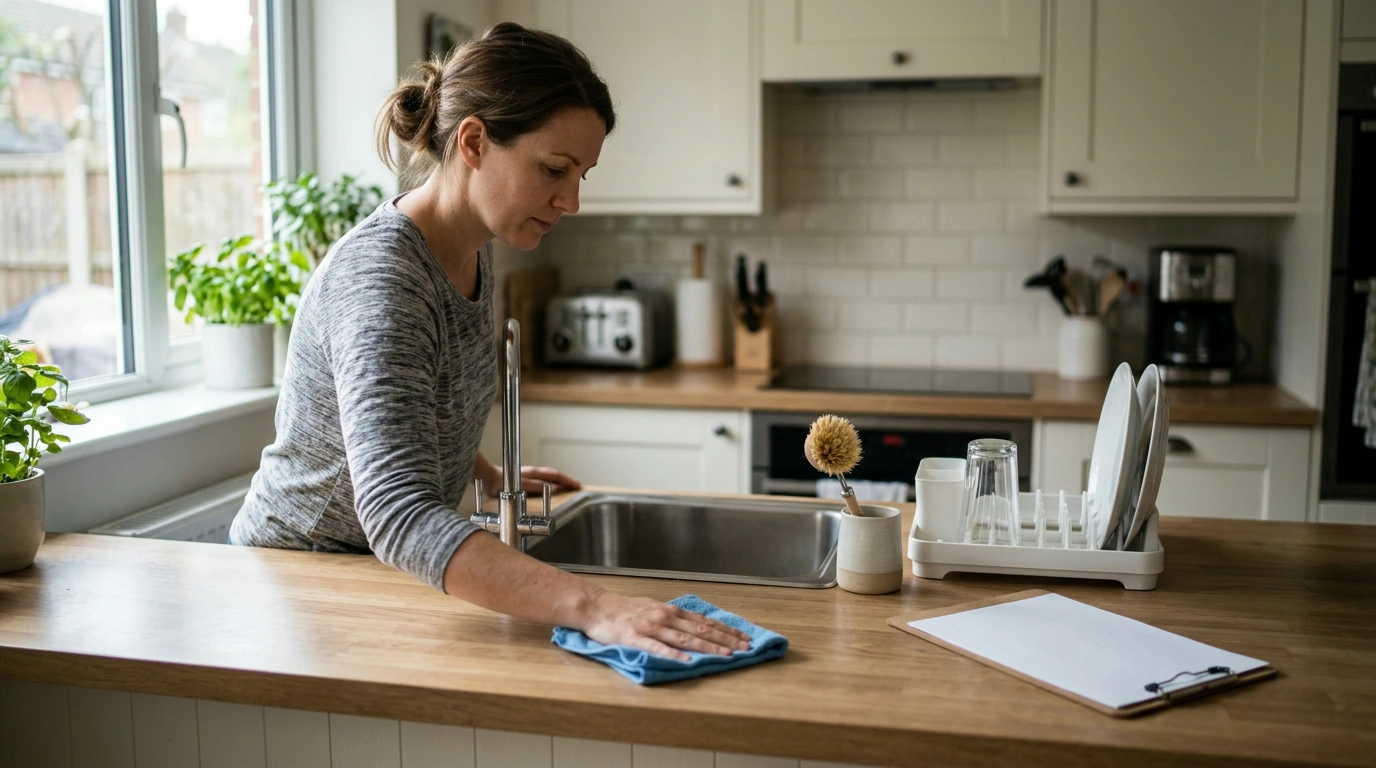
A Daily Kitchen Maintenance Checklist for a Calm, Spotless Space
A clean kitchen doesn’t require marathon scrubbing—just a consistent set of small actions that prevent buildup. When crumbs, grease, and food residue get handled in real time, you avoid the “how did it get this bad?” moment and keep your space ready for everyday life. Use the daily checklist below as a light-touch reset that keeps counters clear, dishes under control, and high-contact surfaces hygienic—without taking over the day.
What “daily maintenance” really means (and what it doesn’t)
Daily maintenance is the kitchen equivalent of brushing your teeth: quick, repeatable habits that stop small messes from turning into stuck-on grime. Think crumbs around the prep zone, grease splatter near the stove, sticky coffee drips, and the clutter that quietly grows on counters.
It’s also important to separate “maintenance” from “deep cleaning.” Daily tasks are fast resets. Deep cleaning—like degreasing cabinet fronts, scrubbing grout, or cleaning the oven—still matters weekly or monthly, but it’s far easier when daily habits keep buildup from forming.
Prioritize high-contact touchpoints: sink and faucet handles, counters, appliance buttons, and trash areas. These spots affect both how the kitchen looks and how sanitary it is. For food safety basics (clean, separate, cook, chill), the CDC offers a helpful overview here: CDC — Keep Food Safe.
Most households can stay on top of things with 10–20 minutes total, spread across the day. Consistency beats intensity every time.
Set up for success: a 2-minute pre-check
Before you start wiping anything, do a quick scan. It keeps you from bouncing between tasks and helps you focus on what will make the kitchen feel “reset” the fastest.
- Check the sink status (are there dishes soaking, food bits stuck to the drain, standing water?).
- Look for counter clutter (mail, bottles, lunch items, charging cords).
- Spot fridge spills (especially on lower shelves and drawers).
- Notice crumbs near the prep zone and stove—those are the crumbs that travel.
Keep supplies easy to reach so the routine doesn’t feel like an extra project: dish soap, a sponge/brush, microfiber cloths, an all-purpose cleaner, and a small roll of trash bags. Also, assign “homes” for the biggest clutter magnets (mail, reusable bags, water bottles) so they don’t become permanent counter décor.
Daily kitchen reset schedule (mix-and-match)
| Moment | Tasks | Typical time |
|---|---|---|
| Morning (before leaving/starting the day) | Empty dishwasher or drying rack; clear counters; quick sink rinse | 3–7 min |
| After each meal/snack | Load dishes; wipe prep area; sweep crumbs around prep zone | 2–6 min |
| After cooking | Wipe stovetop splash areas; soak pans; sanitize high-touch handles/buttons | 4–10 min |
| Evening (closing shift) | Run dishwasher; wash remaining items; wipe counters & sink; take out trash if needed | 8–15 min |
The core daily checklist (in the most efficient order)
This order is designed to reduce re-work. You’ll clear, then clean, then finish with touchpoints and floors so the kitchen feels done.
1) Dishes: keep the sink empty whenever possible
Load the dishwasher as you go, or wash by hand in short bursts. An empty sink makes the whole kitchen look cleaner and prevents odor buildup. If you can’t wash immediately, at least rinse food off plates and give pans a quick soak with hot soapy water.
2) Counters: declutter first, then wipe
Move items off the counter before wiping—cleaning around clutter wastes time and leaves sticky rings behind. Pay extra attention around cutting boards, toaster areas, and coffee stations, where drips and crumbs love to hide.
3) Stovetop and backsplash: spot-clean splatters while fresh
Grease and sauces harden fast. A 30-second wipe right after cooking (once surfaces are safe to touch) prevents a longer scrub later.
4) Sink and faucet: quick scrub, rinse, dry
Give the basin a light scrub, wipe the faucet and handles, then rinse and dry for a clean shine. If you need guidance on keeping hands and surfaces clean during food prep, the USDA’s basics are worth bookmarking: USDA — Clean: Wash Hands and Surfaces Often.
5) High-touch points: quick disinfecting pass
6) Trash and recycling: handle odors early
Compress and replace liners as needed. If the rim is sticky, wipe it immediately so it doesn’t become a “mystery mess” later. If you’re using cleaning products daily, follow safe storage and use guidance (especially around kids and pets): EPA — Safer Choice.
7) Floor quick pass: only the high-traffic zones
Five-minute rescue reset for busy days
Food safety and hygiene essentials that fit into daily routines
Make it stick: cues, batching, and family roles
Printable routine support: a simple way to stay consistent
If you want something you can print for your fridge, planner, or cleaning binder, try this internal resource: Daily Kitchen Maintenance Checklist (digital download).
For a calmer evening routine after the kitchen is reset, you may also like: AI-Powered Checklist for Better Sleep Adventures (digital download).
FAQ
How long should daily kitchen maintenance take?
Most kitchens stay in great shape with about 10–20 minutes total across the day. On hectic days, a 5-minute “rescue reset” (dishes started, counters cleared and wiped, sink rinsed) is enough to prevent buildup.
What are the most important areas to clean every day?
Focus on the sink and faucet, counters, the dish area, fresh stovetop splatters, high-touch handles/buttons, and trash touchpoints. These zones impact both appearance and hygiene the fastest.
How do you keep a kitchen clean when cooking multiple times a day?
Clean as you go: load dishes immediately, wipe the prep area after each round, and soak pans right away. Run the dishwasher more often if needed, batch wipe-downs (counters then sink), and use a posted checklist so everyone can take a quick role.










Leave a comment