Breathing Exercises for Anxiety: 60-Second Reset + 5 Tools
When anxiety rises, breathing often turns shallow and fast—fueling more tension, dizziness, and worry. Gentle, structured breathing patterns can help slow the stress response, settle the body, and create a clearer moment to choose the next step. This guide shares practical techniques for everyday anxious feelings and sudden panic, plus a simple way to build a steady routine.
How breathing affects anxiety in the body
Anxiety can shift breathing upward into the chest and speed it up without you noticing. That rapid, shallow pattern may intensify sensations like tightness, tingling, lightheadedness, and racing thoughts—signals that can feel scary even when you’re not in danger.
Slower, steadier breathing supports the body’s calming pathways by nudging the nervous system toward a “downshift.” Over time, practicing these patterns helps your body recognize them as familiar, so you can access them more quickly when stress spikes.
The aim isn’t “perfect calm.” A more realistic target is a measurable shift: a slightly slower pulse, less air hunger, a softer jaw/shoulders, and a sense of control returning. For more on how stress affects the body, see the American Psychological Association overview.
Quick start: a 60-second reset
If you only remember one tool, make it this: lengthen the exhale. A longer out-breath often encourages the body to settle without forcing anything.
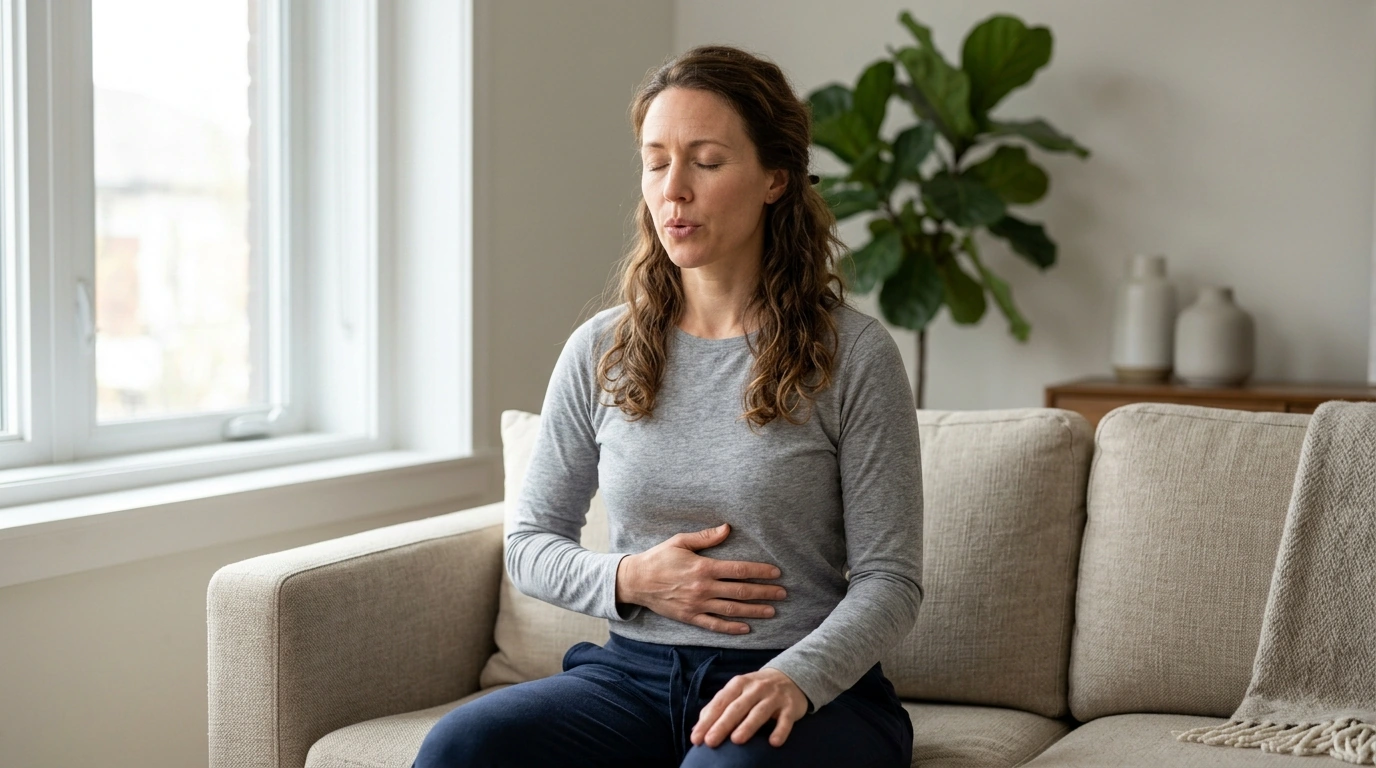
- Posture: Sit tall or stand; soften shoulders; unclench jaw; place a hand on the belly if helpful.
- Pattern: Breathe in through the nose for 4 counts, pause for 1, breathe out slowly for 6–8 counts.
- Repeat: Do 6–8 cycles; keep the exhale longer than the inhale to encourage a downshift.
- If nasal breathing is hard: Try a pursed-lip exhale (like blowing through a straw) to slow the out-breath.
60-second reset options
| Option | Pattern | When to use | What it may help with |
|---|---|---|---|
| Long-exhale breathing | In 4 / Out 6–8 | Mild to moderate anxiety | Racing thoughts, tension, restlessness |
| Box breathing | In 4 / Hold 4 / Out 4 / Hold 4 | When focus is scattered | Feeling overwhelmed, mental clutter |
| Physiological sigh | Inhale (nose) + small top-up / long exhale | Sudden spikes of stress | Acute stress surge, tight chest |
If you prefer a step-by-step format you can pull up quickly, the Simple Breathing Exercises to Calm Anxiety and Reclaim Your Peace (digital guide + calm checklist) is designed to be easy to follow during anxious moments.
Five simple breathing techniques to practice
1) Diaphragmatic (belly) breathing
Inhale so the belly expands gently, then exhale slowly. Think “low and relaxed” rather than “big and deep.” If your shoulders lift, make the next breath smaller.
2) 4-7-8 breathing
Inhale for 4, hold for 7, exhale for 8. Start with 2–4 rounds. If you feel dizzy or strained, shorten the hold (or remove it) and keep the exhale long and easy.
3) Coherent breathing
Breathe at a steady pace (about 5–6 breaths per minute) for 3–5 minutes. Keep it smooth and quiet—almost like you’re trying not to fog a mirror.
4) Alternate-nostril breathing (gentle version)
Inhale through one nostril, exhale through the other, then switch. Keep it light and steady; skip this one if you’re congested or it feels frustrating.
5) Pursed-lip breathing
Inhale through the nose, then exhale through pursed lips for about double the inhale (for example, in 3 / out 6). This can help when the breath feels “stuck,” shallow, or rushed.
For another practical overview of breathwork for stress, the NHS breathing exercises guide is a helpful reference.
When panic hits: a step-by-step breathing plan
Panic often comes with a powerful urge to “fix it now.” The plan below reduces struggle by giving the mind a sequence to follow—especially useful when thoughts feel loud.
For people who like a structured rhythm, box breathing can also help. The Cleveland Clinic explains the basics and benefits of box breathing in a clear, approachable way.
A daily routine that makes calm easier to access
When sleep is the hardest time to settle your nervous system, pairing a brief breathing routine with a bedtime checklist can reduce decision fatigue. The AI-Powered Checklist for Better Sleep Adventures (digital sleep guide) can be used alongside evening breathing to create a steadier wind-down.
Common mistakes and how to adjust
A simple checklist for anxious moments
If having a printable-style sequence helps you stay on track, the digital breathing guide and calm checklist is set up for quick reference when focus is limited.
FAQ
How long should a breathing exercise take to calm anxiety?
Many people notice a shift in 60–180 seconds, especially when the exhale is longer than the inhale. For deeper settling, 5–10 minutes of steady practice can help, and tracking intensity (0–10) before/after makes progress easier to see.
What if breathing exercises make anxiety feel worse?
This can happen when you accidentally over-breathe, which may increase dizziness or tingling. Try smaller breaths, shorten the inhale, lengthen a gentle exhale, and pause to breathe normally; if symptoms persist or you have a respiratory condition, check with a clinician.
Is it safe to do these techniques during a panic attack?
Most gentle techniques are safe for many people, but stop if you feel faint, have severe shortness of breath, or chest pain, and seek urgent care when symptoms feel medically concerning. During panic, start with a physiological sigh and long-exhale breathing rather than big, deep breaths.





Leave a comment