Minimalist Furniture Layouts for Faster, Easier Cleaning

How to Arrange Furniture for Easy Cleaning: Minimalist Layouts That Stay Effortless
A clean home is easier to maintain when the layout supports quick vacuum paths, wipeable surfaces, and fewer dust traps. Minimalist space planning focuses on clear zones, accessible edges, and furniture choices that reduce clutter without sacrificing comfort. Use the steps below to set up a simple, repeatable layout that makes daily tidying and weekly deep-cleaning faster.
Start with a cleaning-first floor plan
Before moving a single piece, treat your room like a map for footsteps and cleaning tools. The goal is a layout that works even on low-energy days—when the fastest win is a clear pass with a vacuum and a quick wipe of the usual surfaces.
- Map the main walking routes first (entry to kitchen, sofa to bathroom, bed to closet) and keep them unobstructed.
- Create “open runways” that a vacuum or mop can pass through without moving furniture.
- Anchor large pieces to the perimeter when possible to keep the center visually and physically clear.
- Leave consistent gaps near walls for baseboard dusting and airflow behind bulky items.
Clean air matters, too: better airflow and fewer dusty corners can support indoor comfort, especially in high-use rooms. For a deeper look at indoor air quality factors, see the EPA’s indoor air quality guidance.
Choose furniture that reduces dust traps
The easiest room to clean is the one with fewer “catch points” for dust, crumbs, and pet hair. When choosing (or repositioning) furniture, prioritize shapes and clearances that prevent buildup and reduce the need to lift, drag, or shuffle heavy pieces every week.
- Prefer raised legs or wall-mounted pieces so floors can be cleaned underneath without lifting heavy items.
- Limit open shelving in high-traffic areas; use closed storage to reduce exposed surfaces that collect dust.
- Avoid low-clearance furniture that requires moving the item for every clean.
- Pick easy-wipe materials for tables and media surfaces; minimize deeply textured finishes in dusty rooms.
If allergies are a concern, reducing dust reservoirs helps. MedlinePlus offers a practical overview of why dust and dust mites can be irritating in everyday spaces: Dust and dust mites.
Use minimalist zoning to prevent clutter spread
Clutter increases cleaning time because it adds micro-tasks: lifting, relocating, dusting around objects, and re-stacking. Minimalist zoning is a layout habit that keeps items from migrating across the room and creating new “surfaces to manage.”
- Assign a single function to each zone (relaxing, eating, working) to keep items from migrating across the room.
- Place a small “drop zone” near the entry (tray, slim console, hooks) to stop clutter at the door.
- Keep cleaning tools close to the mess: a discreet caddy per level or room group speeds up touch-ups.
- Give frequently used items a home at arm’s reach and everything else a closed-storage spot.
Set clearances that make vacuuming and wiping automatic
Quick layout clearances for easier cleaning
| Area | Recommended approach | Why it helps |
|---|---|---|
| Sofa and main seating | Raised legs or clearance underneath; keep a simple path behind/alongside | Vacuuming under and around becomes a single pass instead of moving furniture |
| Bed zone | Space on at least one side; minimal items under-bed (or use sealed bins) | Faster sweeping, fewer dust bunnies, simpler linen changes |
| Dining area | Chairs that tuck fully; avoid overcrowding with extra sideboards | Crumb cleanup is quicker; fewer chair legs to maneuver around |
| Entryway | Slim console + hooks; one mat system | Contains dirt at the door and reduces tracked debris |
| Workstation | Cable management and a clear floor under the desk | Mopping/vacuuming without unplugging or tangling cords |
Room-by-room layout moves that cut cleaning time
For households that share spaces, agree on one “always clear” zone (often the entry path or the dining table). That single rule prevents small messes from becoming a room-wide reset. When disinfecting is needed, follow reliable guidance like the CDC’s cleaning and disinfecting recommendations.
AI-enhanced space planning for a cleaner layout
When wall-mounted storage is part of the plan (hooks, floating shelves, slim wall consoles), choose hardware that supports a secure, tidy installation so floors stay open and easy to mop. For DIY-friendly installs where appropriate, consider tools like the 16″ Rivet Nut Tool Kit with 11 Mandrels & 185pcs Rivnuts Assortment.
Smart layout guide: a practical minimalist plan
- Use a checklist approach: declutter surfaces first, then place anchors (sofa/bed/table), then add only the storage needed to keep items hidden.
- Confirm three non-negotiables: a clear entry path, a clear cleaning path, and a dedicated home for daily essentials.
- If a piece forces frequent moving to clean, reconsider its placement or replace it with a higher-clearance option.
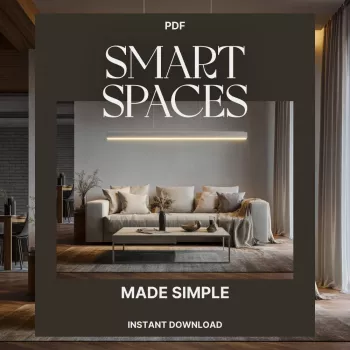
- For step-by-step layouts, printable checklists, and streamlined room templates, use How to Arrange Furniture for Easy Cleaning | Minimalist Home Design eBook as a structured method to set up a low-maintenance home.
FAQ
How much space should be left between furniture and walls for easier cleaning?
Aim for a consistent gap that lets a vacuum head or duster pass comfortably—often a few inches is enough, and slightly more behind bulky pieces. Consistent spacing prevents dust lines from forming in tight pinch points; built-ins can sit flush if they’re sealed and easy to wipe.
Is it better to have furniture on legs or flush to the floor for cleanliness?
Raised-leg furniture makes it easier to vacuum underneath, while flush-to-the-floor bases block under-furniture dust but can be harder to move for deep cleaning. For simplicity, pick one strategy per room so your cleaning routine stays predictable.
What is the simplest minimalist rule to keep a room easy to maintain?
Keep a clear cleaning path and reduce exposed surfaces by using closed storage whenever possible. A quick daily habit—reset one zone (like the coffee table or entry drop zone) in two minutes—prevents clutter from spreading.





Leave a comment