Tight-Space Storage Plan for Apartments & Tiny Homes
How to Plan Storage in Tight Spaces for Apartments, Tiny Homes, and Minimalist Living
Tight spaces feel smaller when storage happens by accident. A simple plan—based on what is owned, how often it’s used, and where it naturally “lands” during daily routines—creates calm without adding bulky furniture. The goal isn’t to hide everything; it’s to give essentials a reliable home, keep surfaces clear, and make clean-up fast enough to actually happen on busy days.
Start with a fast inventory and a “keep by purpose” rule
Before buying a single bin, run a quick inventory focused on the categories that multiply in small homes: mugs, cords, tote bags, cleaning sprays, travel-size toiletries, and extra linens. Duplicates are a storage tax—each extra item steals space from something you truly use.
- Collect duplicates first: stack them in one spot so the volume is visible.
- Use a purpose test: keep items that support current routines (work, cooking, fitness, hobbies) rather than “someday” projects with no scheduled plan.
- Create a temporary sorting zone: use a bed or dining table and three bins: Keep, Relocate, Release.
- Set container limits for tricky categories: one cable box, one memorabilia box, one craft bin. When the container is full, something must leave.
If decision fatigue hits, lean on the “Release” bin first for anything expired, broken, or missing pieces. For deeper decluttering frameworks, the University of Minnesota Extension has practical guidance on organizing and decluttering.
Map storage zones around daily flow (not room labels)
Small homes work best when storage follows behavior. Instead of thinking “kitchen storage” or “bedroom storage,” define 4–6 zones based on what you do every day.
- Common zones: Entry, Cooking, Getting Ready, Work/Study, Laundry/Cleaning, Leisure.
- List the “landing items” for each zone: keys, mail, shoes; cookware and pantry staples; skincare and meds; laptop and chargers.
- Assign a home within one arm’s reach: if something is used at the door, it shouldn’t live across the apartment.
- Count walls and doors as storage: hooks, rails, and over-door organizers reduce drawer and floor crowding.
Professional organizers often start with zones because it reduces “wandering items” that migrate from room to room. If you want more pro organizing standards and resources, visit the National Association of Productivity & Organizing Professionals (NAPO).
Measure micro-spaces and choose the right storage type
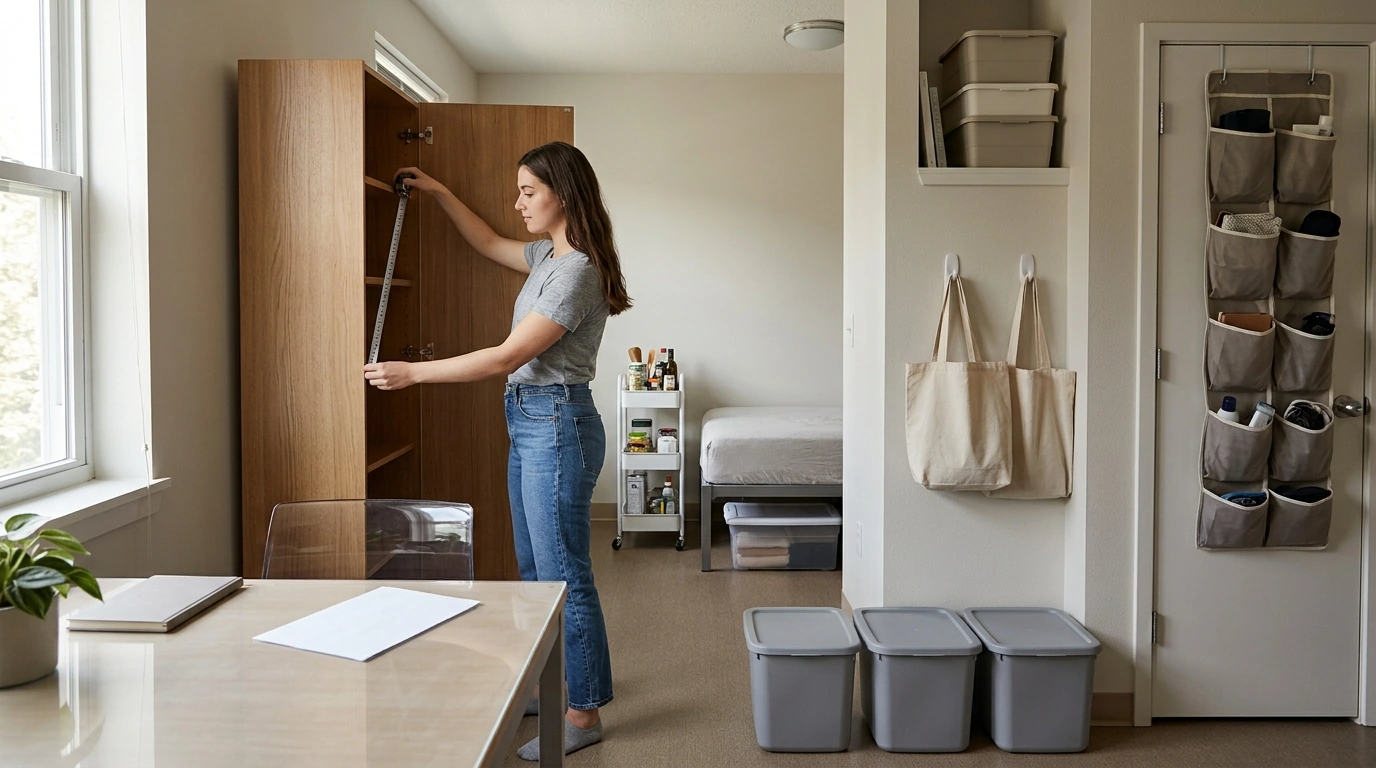
Tight-space storage succeeds or fails on inches. Measure first: cabinet interiors (width/depth/height), under-bed clearance, the back of doors, and the space above closets or the fridge. Then match the storage type to how often you reach for the item.
Quick guide: where to store items based on how often they’re used
| Use frequency | Best locations | Best container types | Examples |
|---|---|---|---|
| Daily | Eye-level shelves, top drawer, counter-adjacent organizers | Open bins, drawer dividers, small trays | Keys, wallet, skincare, coffee tools |
| Weekly | Mid-shelves, labeled drawers, pantry bins | Lidded bins, pull-out baskets, file boxes | Extra cleaning supplies, backup toiletries, tools |
| Monthly/Seasonal | Under-bed, top closet shelf, high cabinets | Clear lidded bins, vacuum bags, garment bags | Bulky blankets, winter gear, holiday items |
| Rare/Archived | Storage ottoman, high closet corners, offsite if needed | Document boxes, sealed bins | Paper records, sentimental keepsakes |
- Use vertical stacking rules: put sturdy, lidded bins on top; keep soft items in compressible bags; avoid unstable mixed stacks.
- Fit containers to the space first: then edit belongings to fit the containers (not the other way around) to prevent overflow.
Use hidden volume: doors, corners, and “dead space”
When square footage is fixed, your best gains come from overlooked volume.
- Behind doors: add over-door hooks for bags and robes; use slim pocket organizers for small items like tape, batteries, grooming tools.
- Corners: corner shelves or a narrow corner cabinet reclaim awkward footprints without blocking walkways.
- Under furniture: under-bed boxes for linens and off-season clothing; under-sofa bins for board games or media gear (if clearance allows).
- Above and below: shelf risers in cabinets, under-shelf baskets, and (where feasible) toe-kick drawers add capacity without creating visual clutter.
Create clear categories with labels and a one-minute reset
Small spaces stay functional when every category is obvious. Labels should match real-life behavior, not aspirational organizing.
Minimalist-friendly rules that keep storage from refilling
For mindful purchasing habits that support smaller living, the FTC’s consumer advice is a helpful reference for making clearer buying decisions and avoiding waste.
A simple plan for renters: upgrades that don’t damage walls
Make it easier with a printable, room-by-room planning system
A worksheet-style plan removes guesswork: list zones, measure micro-spaces, and assign storage “homes” before adding containers. For a ready-to-use system, see How to Plan Storage in Tight Spaces (digital download), designed to help map zones, set container limits, and keep surfaces clear.
If nighttime clutter and racing thoughts are part of why “resetting” feels hard, a simple routine checklist can help reduce friction: AI-Powered Checklist for Better Sleep Adventures (digital download).
FAQ
What’s the best way to store items in a studio apartment without adding bulky furniture?
Prioritize vertical and hidden volume: over-door organizers, removable wall hooks, shelf risers inside cabinets, and under-bed bins. Keep daily-use items at eye level and move seasonal items to high shelves or under-furniture storage.
How can storage stay organized when space is shared with a partner or roommate?
Create shared zones and assign clear “owned” spaces (a shelf, bin, or drawer per person). Use labels and agreed container limits for shared categories like pantry snacks, toiletries, and cleaning supplies, plus a quick daily reset for common areas.
How many storage bins should a small apartment have?
Use as few as possible while keeping categories contained. Measure the exact spaces you can store bins (closet shelf, under-bed, cabinet), then treat bins as limits—if a category overflows, edit the items instead of adding more containers.





Leave a comment