Make Self-Improvement Enjoyable: Joy-First Habit Guide
Joyful Growth Every Day: A Motivation Guide to Make Self-Improvement Feel Enjoyable
Self-improvement sticks when it feels rewarding right now, not only “worth it someday.” When progress is paired with comfort, ease, and a little delight, the brain learns to repeat it. That’s the heart of reinforcement—behavior that’s followed by a positive outcome becomes more likely to happen again (APA Dictionary of Psychology: Reinforcement).
Below are simple, science-aligned ways to make growth feel lighter, more playful, and easier to repeat—without lowering your standards for what matters.
Start with “joy-first” goals, not “should” goals
Many goals fail because they begin with pressure. “I should…” is heavy; “I want to feel…” has momentum. Try building goals around the experience you’re chasing, not just the outcome you’re measuring.
- Swap outcome-only goals for experience-based goals. Instead of “lose 10 pounds,” try “feel energetic after lunch” or “finish the day with a clear head.”
- Choose one growth theme per week. A single theme (confidence, calm, focus, connection) reduces decision fatigue and gives your week a clear “north star.”
- Use the “minimum enjoyable version” rule. Pick the smallest version you’d gladly do even on a rough day—because consistency beats intensity.
- Define “enjoyable” personally. For some people it’s music; for others it’s novelty, simplicity, movement, or social support.
When your goal is designed to feel good during and after, it becomes something you return to—rather than something you endure.
Make the habit easier than procrastination
Motivation is unreliable; friction is predictable. If the habit is simpler than avoiding it, you win more often—without needing heroic willpower.
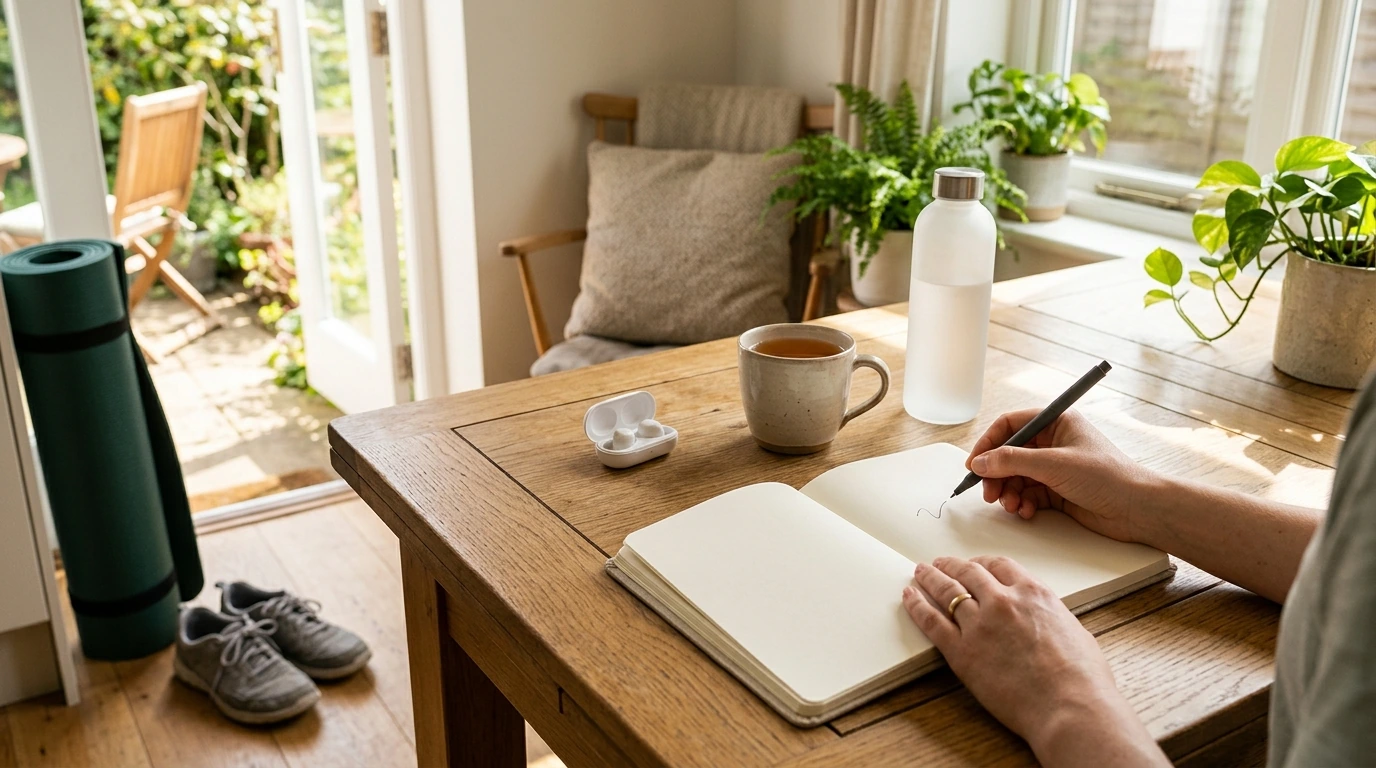
- Lower friction where the habit happens. Put the journal on the pillow. Keep the water bottle on the desk. Leave walking shoes by the door.
- Raise friction for distractions. Log out. Move apps off the home screen. Keep tempting items out of sight so they’re not constantly “asking” for attention.
- Use a 2-minute on-ramp. Start with a tiny action that naturally leads to more: open notes, write one line, roll out the mat, step outside.
- Keep a “done list.” A short record of what you completed trains your attention to notice progress, not just gaps.
This approach makes self-improvement feel less like a fight and more like a gentle slide in the right direction.
Use rewards that build identity (not guilt)
Rewards aren’t “cheating.” They’re how the brain learns. The key is to pick rewards that support the person you’re becoming—rather than rewards that come with guilt.
- Pair effort with a small immediate reward. A favorite tea, a playlist, a comfy chair, a five-minute fresh-air walk—small, consistent, and positive.
- Celebrate completion, not perfection. Make the win condition “kept the promise,” even if the session was short.
- Add an identity statement after action. “That’s what a consistent person does,” or “I follow through, even in small ways.”
- Use agency framing. Replace “I have to” with “I choose to,” which protects motivation and reduces resentment.
Over time, the habit stops feeling like a task and starts feeling like proof of who you are.
Design a daily rhythm that creates momentum
Rhythm beats randomness. A few smart anchors can make progress feel automatic—especially on busy days.
- Anchor one habit to an existing routine. After coffee, after brushing teeth, or after shutting down your laptop.
- Pick a “golden window.” Find 10–20 minutes when energy is naturally highest and reserve it for growth.
- Batch similar tasks. Plan once, execute daily. Fewer context switches means less mental friction.
- End the day with a tiny reset. Set out tomorrow’s first step so the next day starts smoothly.
Enjoyable daily growth ideas by energy level
| Energy level | 5–10 minute options | Why it feels good |
|---|---|---|
| Low | Tidy one surface, stretch for 3 minutes, write one gratitude line | Quick relief and visible progress |
| Medium | Walk + audiobook, prep one healthy snack, practice a skill for 10 minutes | Steady momentum without burnout |
| High | Short workout, deep work sprint, meal prep, creative session | Channels energy into meaningful wins |
Movement is a reliable “mood lever,” and even modest physical activity supports long-term health and daily energy (CDC: Benefits of Physical Activity).
Motivation that lasts: focus on cues and feelings
Lasting motivation is less about hype and more about association: cue → action → good feeling. When the “after feeling” is memorable, the habit becomes self-reinforcing.
Turn self-improvement into a guided routine
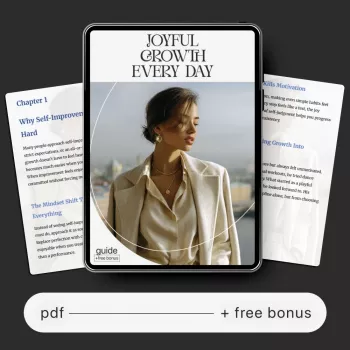
If you want a simple, ready-made structure, Joyful Growth Every Day | Self-Improvement & Motivation Guide is designed to make progress feel lighter, with prompts that keep consistency realistic.
A simple 7-day “joyful growth” reset
Better sleep makes every habit easier. For a simple nightly structure, AI-Powered Checklist for Better Sleep Adventures can help you wind down with prompts and suggestions that make rest feel intentional (National Sleep Foundation: Healthy Sleep Tips).
And if your reset includes movement, comfort helps consistency—gear that feels good to wear can remove a surprising amount of friction. The Men’s Quick-Dry Short Sleeve Sports Shirt is a practical option for walks, workouts, and “just get outside” days.
FAQ
How can self-improvement feel enjoyable instead of exhausting?
Keep actions small, remove friction, and add an immediate reward you genuinely like. Then track the positive “after feeling” so your brain links the effort with a benefit you can feel right away.
What if motivation disappears after a few days?
Return to the minimum enjoyable version and rely on consistent cues (same time, same place, same trigger). Focus on identity and routine—excitement comes and goes, but simple structure stays.
Is it better to build one habit at a time or several?
Start with one anchor habit until it feels automatic, then layer a second habit that fits naturally into the same routine. Stacking too many changes at once often increases friction and burnout.







Leave a comment